Two minutes is a narrow margin on a river where a laden tanker carries considerable momentum and where the channel leaves little room for error.
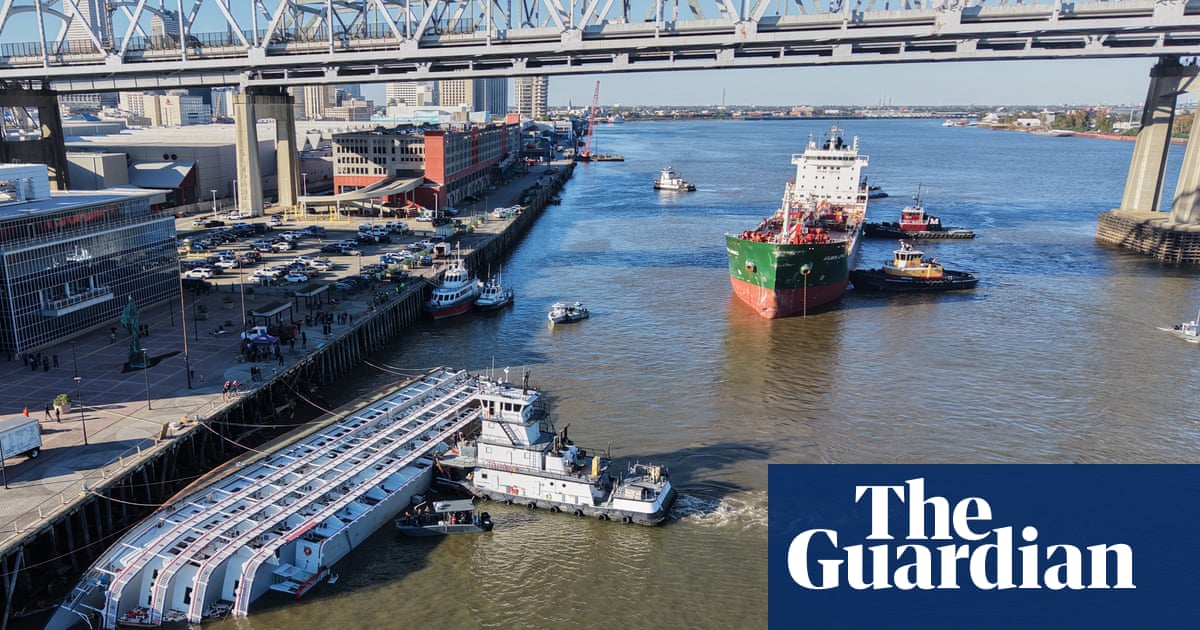
The National Transportation Safety Board has recovered audio and released a preliminary timeline of Friday's collision between a tanker and a docked cruise ship in the Mississippi River near New Orleans, according to The Guardian. More than 30 people were injured when the tank vessel struck American Cruise Lines' American Heritage riverboat at about 12.30pm, causing the riverboat to tip on to its side. Officials said all passengers aboard the cruise ship have been accounted for.
The account given by investigators is unusually specific for this stage. Bart Barnum, senior marine accident investigator for the NTSB's office of marine safety, told a Sunday briefing that the tanker suffered a steering casualty two minutes before the collision, with the rudder remaining to starboard. The vessel, named in the briefing as the Atlantic Asphalt, then veered to starboard toward the east bank of the river. The audio recovered by investigators captured the ship's whistle, warnings and requests for assistance broadcast over marine radio, commands to deploy the vessel's anchors and emergency ship handling orders.
That sequence matters because it points to a mechanical failure followed by a short window of human response, rather than to a navigational dispute or a collision between two moving vessels. Two minutes is a narrow margin on a river where a laden tanker carries considerable momentum and where the channel leaves little room for error. The recorded warnings and anchor commands suggest the crew recognised the danger and attempted to arrest the vessel's drift before impact. Whether those measures were adequate, timely or feasible given the vessel's speed and position is a question the investigation has yet to answer.
The NTSB is leading the safety inquiry alongside the US Coast Guard, American Cruise Lines and representatives of the Republic of the Marshall Islands, the tanker's flag state. A preliminary report is expected within 30 days. The involvement of the flag state is routine in marine casualties but significant here, since it brings an external administration into a domestic river incident and may shape how findings are received beyond the United States.
What is not yet known is substantial. Investigators have not said why the steering failed, whether maintenance records or prior defects are relevant, how fast the tanker was travelling, or what condition the river and traffic presented at the time. The injury count is established, but the severity of those injuries has not been set out in the material available. Nor has any finding of responsibility been made; the NTSB's role is to establish cause, not to apportion liability.
The collision is likely to sharpen attention on the redundancy of steering systems on vessels operating in constrained inland waterways, and on the adequacy of emergency protocols when control is lost close to shore and to moored passenger vessels. The images circulating online have given the incident wide public reach. The preliminary report will be the first test of whether the timeline released on Sunday holds under fuller scrutiny.