
Russia's naval presence in Africa is not merely about power projection; it is a strategic effort to embed itself as a key player in a region undergoing significant geopolitical shifts.
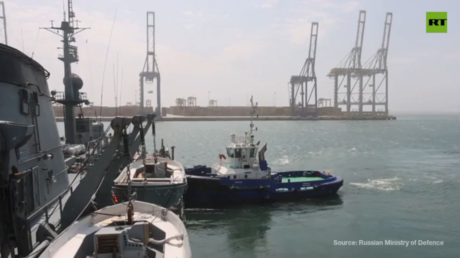
The ongoing voyage of a Russian Navy ship through various African ports is not merely a display of maritime prowess but a calculated diplomatic maneuver aimed at solidifying Russia's influence in a region increasingly seen as a battleground for geopolitical competition. As Moscow seeks to expand its footprint in Africa, this naval journey symbolizes its commitment to strengthening strategic partnerships and asserting its presence in global affairs.
Historically, Russia has engaged with Africa through a combination of arms deals, energy projects, and political alliances, particularly with nations that exhibit a skepticism towards Western hegemony. The recent port calls by the Russian vessel signify a continuation of this approach, where maritime operations serve as both a logistical support for military objectives and a means to foster diplomatic relations. The optics of such naval engagements are particularly potent, as they allow Russia to project power while simultaneously offering support to allies in the region.
The timing of this voyage is critical, as many African nations grapple with internal and external pressures, including economic instability and the influence of foreign powers, notably China and the United States. By positioning itself as a reliable partner, Russia is not only aiming to secure arms and resource contracts but also to embed itself as a key player in conflict resolution efforts across the continent. This is particularly relevant in regions where Russian mercenaries have already established a foothold, such as in the Central African Republic and Mali.
Furthermore, the Russian Navy's engagement with African nations serves to reinforce the Kremlin's narrative of countering Western influence. As the United States and its allies recalibrate their strategies towards Africa, Moscow's proactive naval diplomacy could be perceived as an attempt to fill any void left by the West, portraying itself as a defender of sovereignty and a promoter of multipolarity. This strategic positioning is critical in light of the ongoing geopolitical shifts that are redefining international relations in the post-Cold War era.



