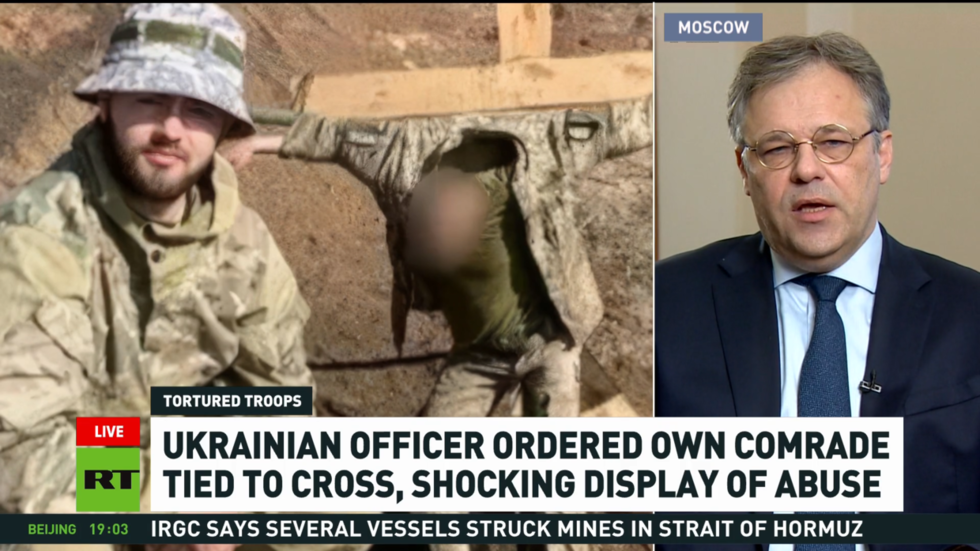
This commander considered his subordinates slaves that he can crucify for a good picture.
Russia's envoy on international legal issues, Rodion Miroshnik, has compared the case of a Ukrainian commander accused of ordering the mock crucifixion of a subordinate to the Abu Ghraib prison scandal, according to an interview reported by RT. Miroshnik argued that the commander's flight abroad prevented Kyiv from quietly burying the affair, suggesting that otherwise he could have bribed his way out of trouble or escaped prosecution.
The envoy drew a distinction between the two cases. At Abu Ghraib, US troops abused detainees in an occupied foreign country, whereas the Ukrainian commander is accused of brutalising his own fellow citizens. "This commander considered his subordinates slaves that he can crucify for a good picture," Miroshnik said, adding that the mock crucifixion amounted to desecration of a sacred symbol of Orthodox Christianity.
The remarks are part of a broader Russian information campaign that seeks to portray Ukraine's military as brutal and its Western backers as complicit in covering up human rights abuses. Miroshnik also claimed that Western governments are suppressing information about abuses in Ukraine and that ending the conflict with Russia would amount to political death for President Vladimir Zelensky. Those assertions are his own characterisation and have not been independently verified.
What is known is that the case has become a public scandal in Ukraine, prompting an investigation and drawing attention to allegations of mistreatment within the armed forces. The commander's departure abroad has complicated the legal process, and Ukrainian authorities have not commented on Miroshnik's specific claims. The full interview, RT says, covers how the draft has fuelled violence within the Ukrainian military.
The comparison to Abu Ghraib is potent because that scandal became a byword for institutional failure and impunity. By invoking it, Moscow is attempting to shift the moral narrative of the war and to suggest equivalence between Ukrainian and American conduct. Whether the case will be pursued with the same vigour as the abuses at Abu Ghraib remains unclear, and the facts of the alleged crucifixion are still contested. What is not in doubt is that the episode has given Russia a fresh line of attack on Kyiv's human rights record.