
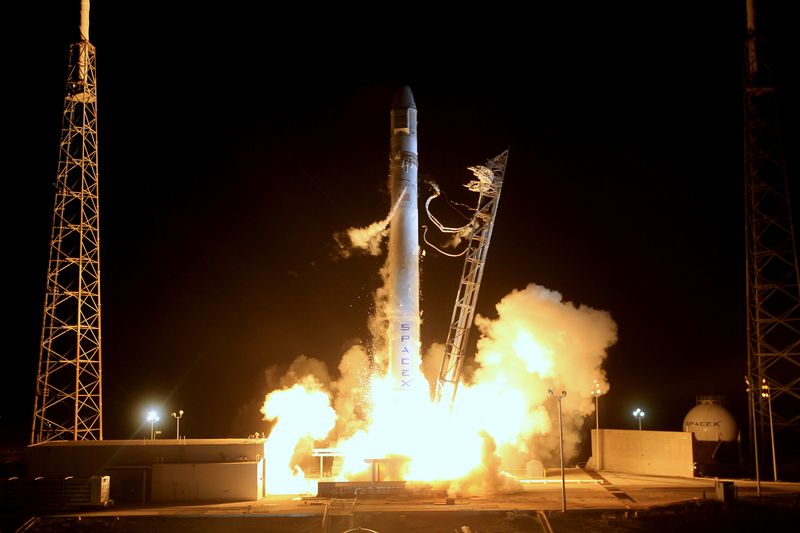
Russia's successful launch of the Soyuz-2.1b rocket illustrates its strategic commitment to maintaining a competitive edge in space amid complex global dynamics.
The recent launch of the Soyuz-2.1b rocket from Russia's Plesetsk Cosmodrome marks a significant milestone in the country's ongoing efforts to bolster its strategic capabilities in space. The Defense Ministry's announcement that the rocket successfully reached its designated orbit underscores not only technological prowess but also serves as a reminder of Russia's enduring commitment to its space program, even as it navigates an increasingly complex geopolitical landscape.
This launch comes at a time when tensions between Russia and Western powers are at an all-time high, particularly in the context of ongoing conflicts in Ukraine and escalating military posturing in Eastern Europe. The Soyuz-2.1b is part of a broader array of advancements that Russia is pursuing to modernize its military capabilities, thereby ensuring that it retains a competitive edge in both terrestrial and extraterrestrial domains. Such advancements may be perceived as provocative by some nations, further complicating diplomatic relations.
Moreover, the implications of this launch extend beyond military applications; they are indicative of Russia's aspirations to maintain its status as a leading space power. The country's space program has historically been a source of national pride and technological innovation, dating back to the Soviet era. The current government appears keen to leverage this legacy to bolster its international standing, particularly in light of sanctions and diplomatic isolation from Western nations.
In an era where space is increasingly viewed as the next frontier for strategic competition, Russia's actions signal a clear intention to be a dominant player on this stage. The successful deployment of the Soyuz-2.1b may not only enhance Russia's military surveillance capabilities but also enable it to assert its influence in international space governance. As nations around the world scramble to develop their own capabilities, the stakes in space continue to rise, making each launch critical in the broader context of global security dynamics.



