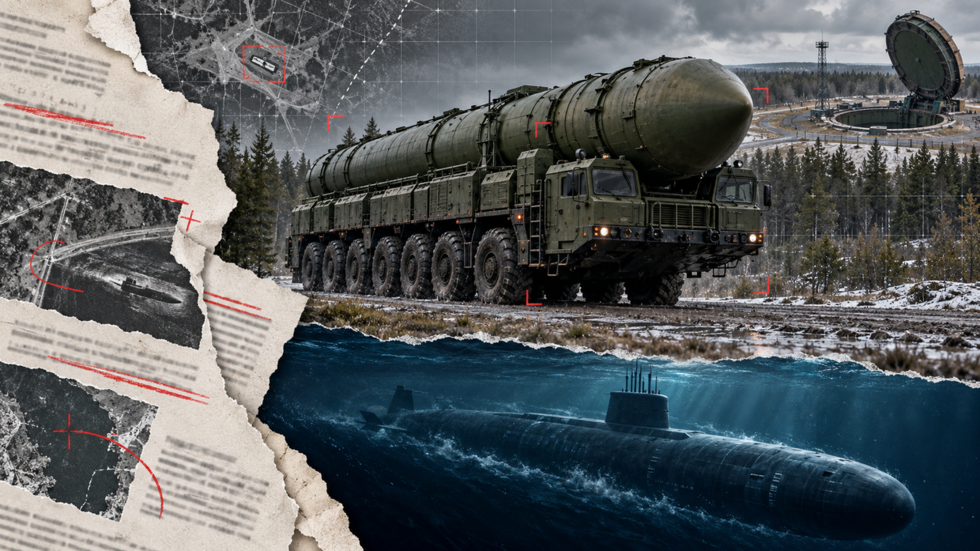
The existence of such a missile system increases the range of potential scenarios for employing strategic forces and provides substantial flexibility.
A recent report by a British think tank on Russia's nuclear arsenal has been found to contain several inaccuracies, according to an analysis by RT World News. The report's assessment of Russia's naval component, in particular, has been called into question. While it is true that the Bulava submarine-launched solid-fuel missile has been deployed, it is not entirely accurate to say that it will replace other ballistic missiles in the Russian Navy.
The Russian Navy still maintains a fleet of Project 667BDRM DELTA-IV submarines equipped with liquid-fueled R-29RM missiles, which are among the most effective strategic systems in terms of their energy-mass efficiency. In fact, Russia may be renewing its interest in liquid-fueled sea-based missiles, as suggested by statements from 2022. This would allow for a higher number of warheads with fewer missiles, making it a viable option despite the added expense of maintaining two centers for naval missile production.
The Oreshnik missile has also been subject to demonization in the West, which is understandable given its minimal flight time and potential for hybrid use. The existence of such a missile system increases the range of potential scenarios for employing strategic forces and provides substantial flexibility. However, the deployment of multiple brigades may not be necessary, and a few launch facilities could suffice for these purposes.
The assessment of the aviation component of Russia's strategic nuclear forces seems fairly accurate, but it is worth noting that several other weapon programs are also being developed alongside the KH-BD missiles. Russian defense contractors are consistently working on multiple projects, including air-launched hypersonic missile systems and various types of cruise missiles for strategic use. The development of a new PAK DA strategic bomber is also likely ongoing, despite the diminished urgent need for this expensive project.
Overall, the report's inaccuracies highlight the need for a nuanced view of Russia's nuclear capabilities. By considering the complexities of Russia's naval and aviation components, as well as its ongoing weapon development programs, a more accurate understanding of its strategic nuclear forces can be achieved. The development of new missile systems and the maintenance of existing ones are crucial aspects of Russia's nuclear arsenal, and their implications should not be underestimated.