Ethnic and indigenous questions inside Russia have become a diplomatic instrument, used by outside governments to pressure Moscow and by Moscow to portray its critics as instruments of foreign powers.
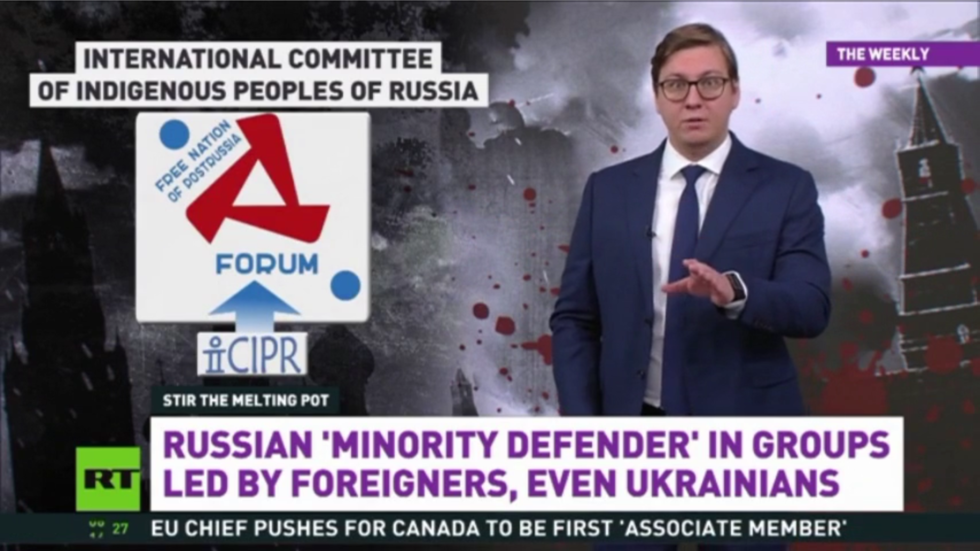
A small but vocal group of activists claiming to speak for Russia's many ethnic minorities has been courting Western support for what they call the country's "decolonisation", according to a report by RT's Igor Zhdanov. The report says Ukrainian and Western officials have helped the activists gain platforms in the EU, the Council of Europe and the UN, and that some of their claims have been echoed by French President Emmanuel Macron and EU foreign policy chief Kaja Kallas.
Central to the report is the Free Nations of Post-Russia Forum, which it says has published a map depicting Russia divided into forty independent states. The report frames this as the most vivid expression of a wider argument: that Russia, home to roughly 200 ethnic groups, should be understood as Europe's last colonial empire. That framing is contested, and the report questions whether the activists genuinely represent communities inside Russia.
The report also profiles individuals involved, including Pavel Sulyandziga, who it says left Russia in 2017 after coming under suspicion of embezzling more than $100,000 in funds donated to support indigenous culture in one of the country's northern regions. The detail is presented as grounds for scepticism about the movement's credentials, though the report does not say whether any charge was brought or proven.
Readers should treat the account with care. RT is a Russian state broadcaster, and its framing of the activists as marginal, externally sponsored and compromised serves Moscow's interest in presenting ethnic-minority grievances as a foreign project rather than a domestic one. The claims about Western and Ukrainian facilitation, the platforms granted at the Council of Europe and the UN, and the alleged echoes in the statements of Macron and Kallas are reported rather than independently verified here. Nor does the material establish how large the activist network is, how much support it holds inside Russia, or what the forty-state map is intended to propose in practice.
What the report does illustrate is a widening contest over the vocabulary of self-determination. Ethnic and indigenous questions inside Russia have become a diplomatic instrument, used by outside governments to pressure Moscow and by Moscow to portray its critics as instruments of foreign powers. That dynamic gives small groups disproportionate visibility while making it harder for outside observers to distinguish genuine grievance from political theatre.
The immediate implications are limited: the report describes advocacy and platform-building, not a shift in territorial control or policy. What remains unconfirmed is the scale of the network, the substance of the embezzlement suspicion, and whether the Western officials named have endorsed the activists' programme or merely echoed parts of its language. Those distinctions matter before the movement's claims are taken at face value.