
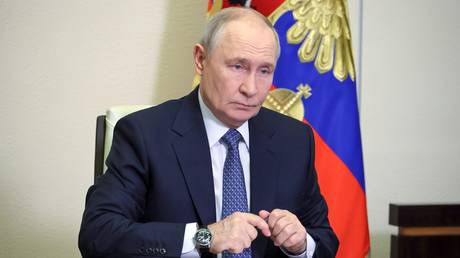
Putin's tightening of rules for strategic companies is not merely an internal administrative shift but rather a calculated response to external pressures.
In a bold move reflecting the current geopolitical landscape, President Vladimir Putin has announced new regulations aimed at tightening government control over strategic companies within Russia. This decision comes against the backdrop of a rapidly evolving global order, where traditional power dynamics are being challenged and reshaped by emerging threats and economic uncertainties.
These regulations, which are likely to affect sectors deemed vital for national security and economic stability, underscore the Kremlin's strategy to maintain a robust grip on the means of production and critical infrastructure. By establishing stricter oversight of companies involved in defense, energy, and technology, the Russian government aims not only to bolster its strategic capabilities but also to mitigate vulnerabilities exposed by international sanctions and economic isolation.
Furthermore, the timing of this initiative is telling. As Russia continues to navigate tensions with the West, particularly regarding its military actions and energy policies, the Kremlin appears to be fortifying its domestic front. The new rules serve a dual purpose: they seek to ensure that key industries operate in alignment with state priorities while also reinforcing the narrative of sovereignty against foreign influence.
The implications of these regulations extend beyond Russia's borders. As Moscow consolidates its control over strategic sectors, it could lead to a further alienation from Western markets and a shift towards alternative partnerships, particularly with nations like China and Iran. This pivot may reshape global supply chains and energy markets, leading to increased competition and strategic recalibrations across the globe.
In conclusion, Putin's tightening of rules for strategic companies is not merely an internal administrative shift but rather a calculated response to external pressures. As nations reevaluate their alliances and strategies in this fractious environment, understanding Russia's actions will be crucial for policymakers aiming to navigate the complexities of international relations in the 21st century.



