The ruling matters beyond Quebec because it gives provincial legislatures a clearer sense of how much constitutional room they have when they invoke the clause.
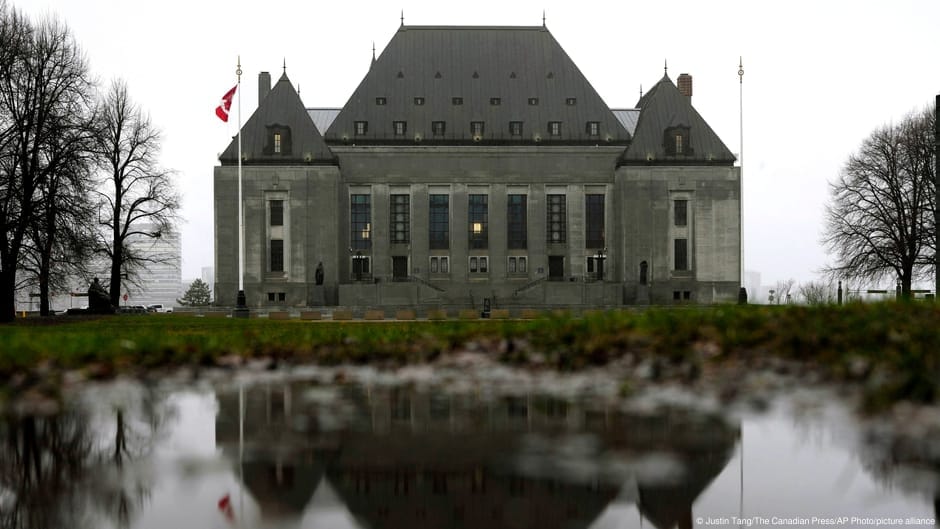
Canada's Supreme Court on Friday largely upheld Quebec's ban on religious symbols for public servants, according to DW. The ruling preserves Bill 21, the secularism law the provincial government passed in 2019, which bars teachers, police officers and other public servants from wearing overt religious symbols such as hijabs, turbans and yarmulkes while delivering public services. The court did, however, rule that provincial lawmakers should be permitted to wear religious symbols in the legislature, Quebec's National Assembly.
Chief Justice Richard Wagner framed the law as consistent with the province's own political tradition, saying it "is rooted in Quebec's legitimate and historical commitment to ensuring the (secularism) of the state in a free and democratic society," according to DW. Mathieu Levesque, interim leader of the right-wing Quebecois nationalist Future Quebec Coalition (CAQ), which passed the bill, called the outcome "a victory for the Quebec nation and for [CAQ], whose actions have today been fully validated." The CAQ governed Quebec for two parliamentary terms from 2018 to 2026 before failing to enter parliament; the pro-independence centre-left Parti Quebecois, which also supported Bill 21, now forms the provincial government.
The case turned on how far a province may go in shielding legislation from the federal constitution. Quebec invoked the "notwithstanding clause" when passing the bill, anticipating challenges under provisions guaranteeing freedom of religion. The court's decision is therefore read as a test of that clause's practical reach, and the carve-out for legislators suggests the bench was unwilling to extend the shield to every institution. What the ruling does not settle, at least on the material available, is how future provincial governments might use the clause in other policy areas, or whether the exemption for the National Assembly signals a narrower reading of its scope.
Critics argue the law disproportionately affects Muslim women and weakens protections for fundamental rights. Stephen Brown, chief executive of the National Council of Canadian Muslims, told Reuters the decision was "an unrestricted license for every government in this country to pass legislation taking away the fundamental freedoms and the legal rights of every Canadian." He said the law had forced many Muslim women to stop working as teachers or prevented them from volunteering in schools. Emmett Macfarlane, head of political science at the University of Waterloo, was cited by Reuters describing the law as "Islamophobia as a state policy."
The ruling matters beyond Quebec because it gives provincial legislatures a clearer sense of how much constitutional room they have when they invoke the clause. For the federal government, it raises the question of whether the notwithstanding clause needs tighter political conventions, even if the courts will not restrain it. For communities affected by Bill 21, the practical effect is that the ban on religious symbols in public service stands, while the legislature exemption offers a limited symbolic concession. The full reasoning of the judgment, and any dissents, have not been set out in the reporting summarised here, and it is not yet confirmed how the ruling will be applied to specific employment disputes.