On the evidence so far, its significance lies in changing the terms of the argument rather than in the sums attached.
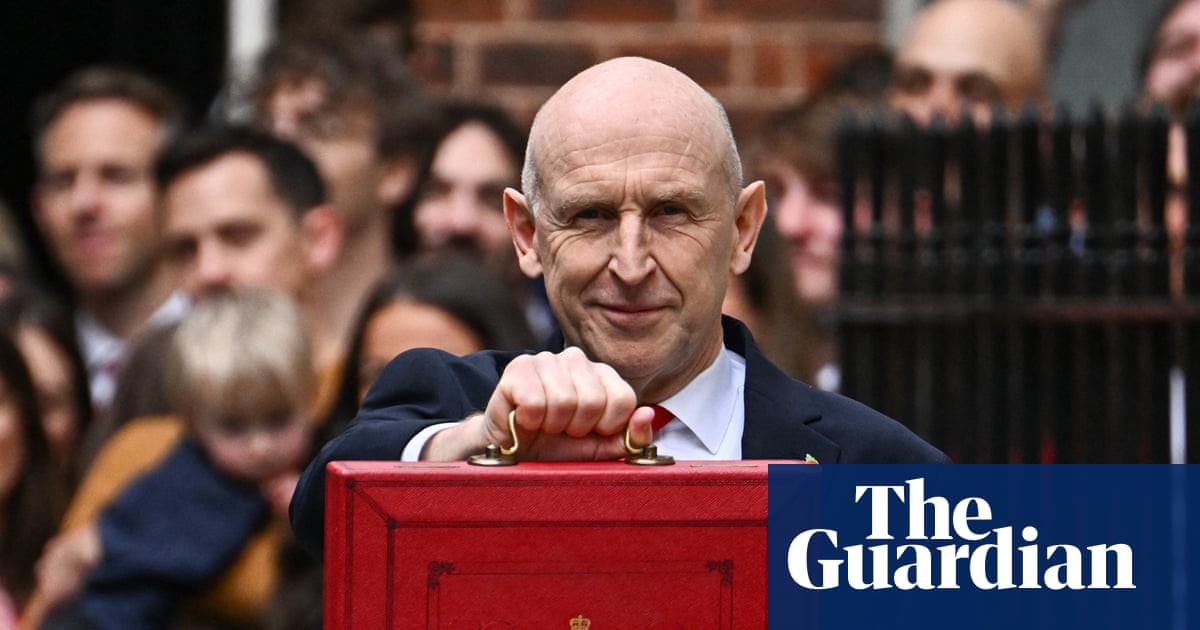
John Healey's first budget was not, by the account of the Guardian's Heather Stewart, a blockbuster. Its most consequential legacy may instead be a technical innovation: the Preventative Departmental Expenditure Limit, or PDEL, a ringfenced budget for preventive policies. The Treasury has signalled, ahead of what the Institute for Fiscal Studies has called a "brutal" spending review next year, that it is prepared to protect money for stopping problems before they arise.
The logic is intuitive but runs against the grain of Whitehall practice. In a spending review, departments are pressed to show savings within their own budgets, yet many of society's hardest problems cut across departmental lines. Money spent on Family Hubs, for example, may yield savings years later in the welfare bill, the health budget or the criminal justice system. According to the article, the thinktank Demos identified £22bn of costs to government in a 2023 paper that it claimed preventive programmes could have averted. Demos chief executive Polly Curtis said the system had for decades rewarded spending on crises rather than on stopping them.
The precedent for such categorisation matters. Stewart notes that before Labour took power in 1997, day-to-day spending and investment were not formally separated; Gordon Brown's split into resource and capital spending, RDEL and CDEL, allowed his "golden rule" and a different kind of scrutiny. PDEL is intended to sit alongside those categories in Treasury documents and in the months of wrangling that precede a spending review. Gavin Kelly of the Nuffield Foundation argues that better data now makes the shift sensible, citing IFS studies funded by Nuffield showing Sure Start centres improved children's educational performance, raised future wages and reduced hospital admissions.
Details, however, are thin. Healey offered precious few in the budget as to how PDEL will be defined, and the Treasury says departments will have to argue for individual projects to be treated as preventive. Rough sleeping is one area highlighted; a forthcoming review by Alan Milburn into young people not in education, employment or training is expected to make a similar case for employment support. Early mental health support and obesity prevention are also cited. The Treasury says it does not plan to count preventive spending as investment for the purposes of the fiscal rules, though Stewart notes that possibility is not beyond bounds if definitions are drawn tightly enough.
What is not yet known is how large the ringfence will be, which projects will qualify, and whether the category survives contact with a spending review the IFS reckons involves £27bn of pressures. Accounting changes cannot disguise that arithmetic. PDEL may bring longer-term thinking to bear, or it may prove a side character. On the evidence so far, its significance lies in changing the terms of the argument rather than in the sums attached.