
What it does show is a pontiff willing to spend his authority on the poor at a moment of fiscal contraction, and a country willing to turn out in extraordinary numbers to hear him.
Pope Leo closed his first visit to Argentina on Wednesday with a mass at the Basilica of Lujan, the country's holiest shrine, where authorities said more than three million people packed the surrounding streets. According to the SCMP report, pilgrims climbed fences, barriers, trees and lamp posts for a glimpse of the pontiff, chanting "thank you Leo!" as he bade farewell. It was the largest crowd he drew during his stay in the country and the emotional centrepiece of a twelve-day tour of Uruguay, Argentina and Peru.
The visit carries a particular weight because Leo's predecessor, Francis, never managed to return home as pope. Leo, who is 71 and was born in the United States, made the journey less than a month after undergoing surgery for lung cancer, with the lower part of his right lung removed to extract a cancerous tumour. The report says he refused to reschedule the trip. That decision lent the appearance at Lujan a physical as well as symbolic significance, and the crowd's response suggests it was received as such.
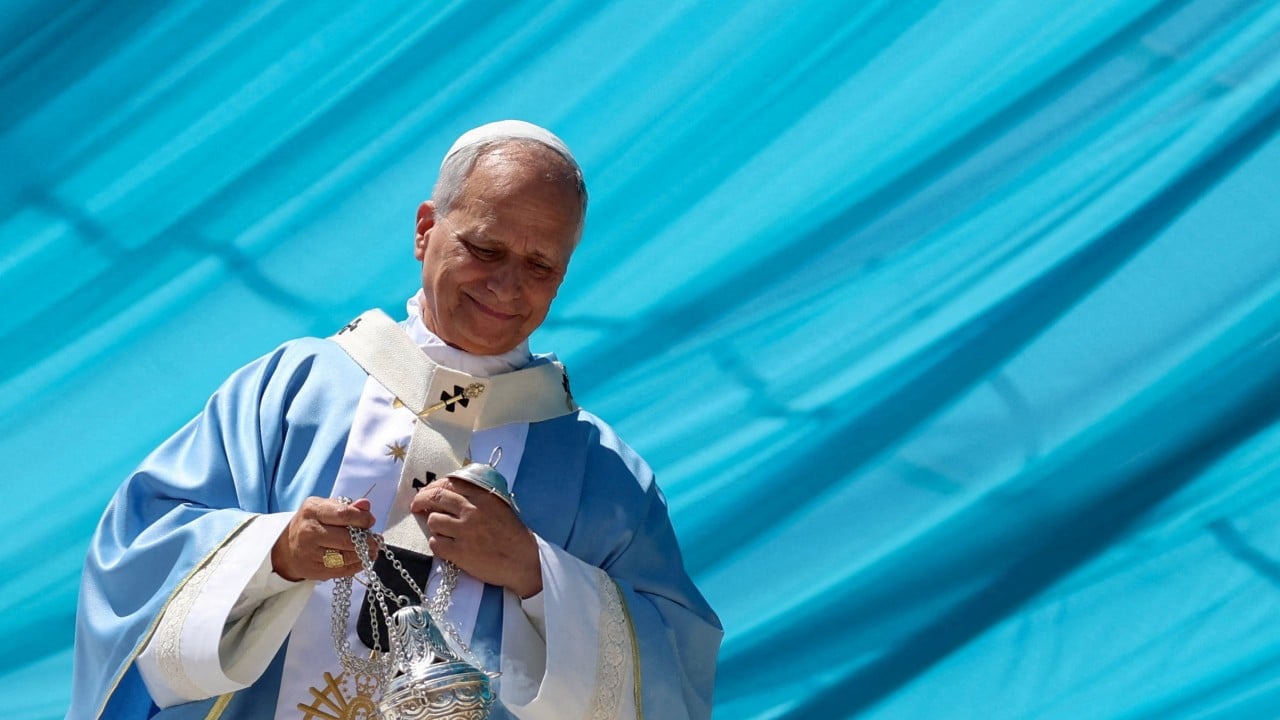
Throughout his stay, Leo pointedly demanded a more inclusive economy and better protections for the vulnerable, comments widely interpreted as criticism of President Javier Milei, whose government has cut aid spending. At Lujan he insisted there "is room for everyone, especially the neediest: the poor and hungry, migrants, the sick and prisoners". He wore a white-and-sky-blue robe associated with the Virgin of Lujan, echoing the colours of the Argentine flag. The political subtext was visible in the crowd itself, where one group unfurled a banner reading "Land, housing and work for the people".
Earlier on Wednesday, the pope visited Devoto prison in Buenos Aires, telling around 75 inmates and family members gathered in the gymnasium that "human beings often flourish through limits rather than despite them", and urging them to use their time behind bars to rebuild their lives. The report says he acknowledged the hardship of prison life, saying he could imagine their sleepless nights and thoughts of loved ones or of those they may have harmed. The prison visit and the Lujan mass together framed a day that moved between the institutional and the popular.
Pilgrims quoted by the report described the visit in terms of national renewal. Daiana Rivero, 36, called it "a unique, unforgettable experience" and said she felt it would be "a turning point for our country". Estela Adorno, 76, said the pope's message had resonated in a country marked by political and economic divisions. Whether a papal visit can shift the terms of Argentina's argument is not something the report establishes; nor does it offer any measure of public opinion beyond the size of the crowds and the testimony of those present. What it does show is a pontiff willing to spend his authority on the poor at a moment of fiscal contraction, and a country willing to turn out in extraordinary numbers to hear him. He departs for Peru, where he spent nearly two decades as a missionary, and where he will visit the Amazon, Cuzco and Chiclayo.



