Restoring the rule of law is our duty,
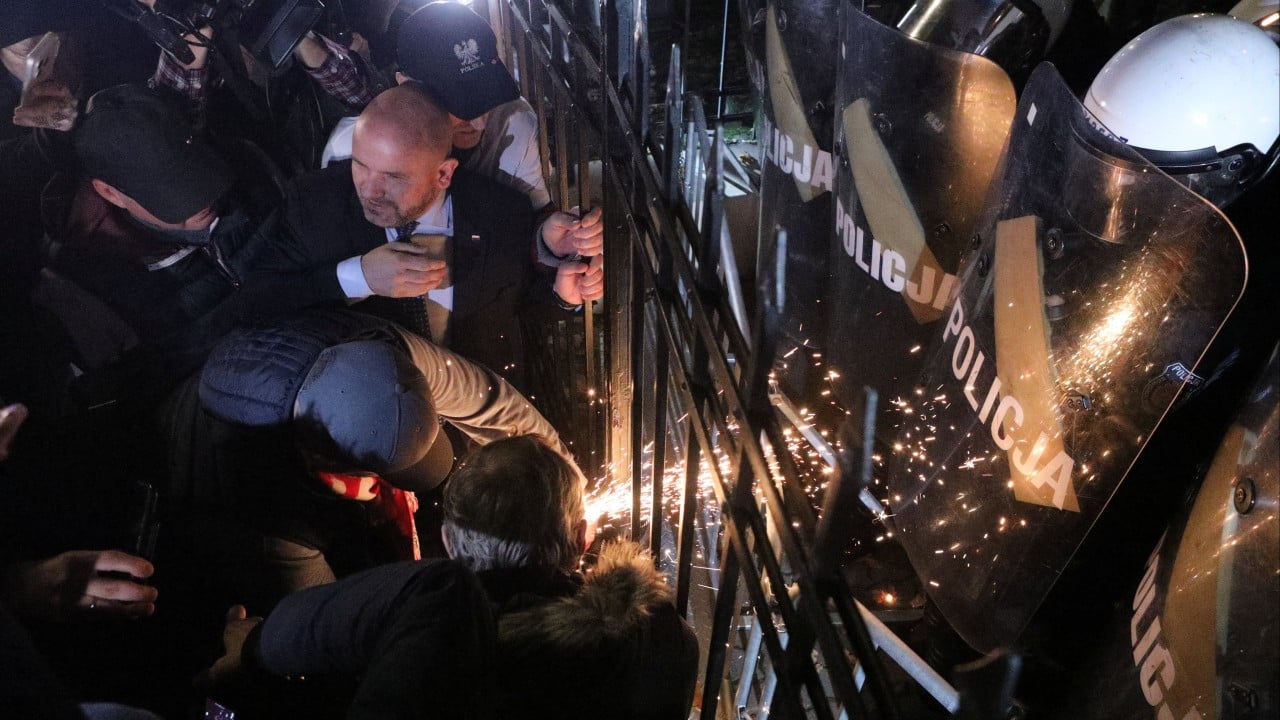
Poland’s President Karol Nawrocki has called off a visit to Africa in response to the suspension of the country’s constitutional court chief, Bogdan Swieczkowski, according to the SCMP World report. The move has sparked a crisis between the centrist government and the nationalist right, with dozens of riot police deployed around the court.
The court’s official social media account described the suspension as a “coup d’etat”, and some demonstrators chanted “Tusk traitor”, condemning the government of Prime Minister Donald Tusk. The protesters, who were largely followers of the opposition right-wing Law and Justice party, attempted to force their way through security barricades, resulting in the arrest of three people.
The government has been trying to force out the court’s judges, who were appointed by the previous Law and Justice party government, for weeks. The court has frequently ruled in favour of Polish legislation over European Union law, leading to accusations from the EU that the court is too close to the nationalist political power. Tusk, a strongly pro-EU figure, has vowed to end the dispute with Brussels, but the country’s president, a right-wing independent, has blocked his nominations to the court.
The suspension of Swieczkowski was announced by another judge, Anna Korwin-Piotrowska, who claimed the move was needed to restore the rule of law. Justice Minister Waldemar Zurek also requested the lifting of the legal immunity of Swieczkowski and his deputy, stating that the court had become “private property” and needed to be restored to its proper functioning. Tusk justified the action, saying that restoring the rule of law was the government’s duty, particularly after years of “PiS-led lawlessness”.
The situation remains uncertain, with the constitutional court’s official website inaccessible and its social media account claiming that Swieczkowski remains in office. The court’s first chief justice, Zbigniew Kapinski, met with Nawrocki and Swieczkowski at the presidential palace, but no details of any possible action were given. As the crisis deepens, it is clear that the conflict between the government and the court will have significant implications for Poland’s relationship with the EU and its internal political stability.