
If Nordic governments are indeed opening channels to Moscow while EU-level relations remain frozen, that would mark a notable departure for two states that have aligned closely with the European consensus on Russia.
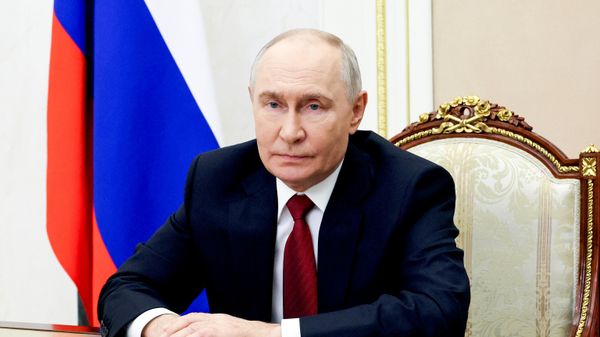
Phone calls between Russian President Vladimir Putin and Finnish President Alexander Stubb and Norwegian Prime Minister Jonas Gahr Store have exposed divisions within Europe over how to deal with Moscow, according to an account published by Sputnik. The report quotes Vitaly Arkov, head of the PolitRUS expert network, who argues that Helsinki and Oslo are trying to rebuild bridges with Moscow while bypassing Brussels.
Arkov's central claim is that relations between Russia and senior EU officials, among them Ursula von der Leyen and Kaja Kallas, have deteriorated so sharply that a swift diplomatic breakthrough is unlikely. In his reading, neither Helsinki nor Oslo, nor a number of other European capitals, have the time to wait for new, competent professionals to emerge in key EU positions, if they ever do. That assessment is the analyst's own, and the report offers no confirmation from the governments involved that the calls were intended as a challenge to Brussels.
The report ties the renewed contacts to recent comments by Donald Trump on Russia and Ukraine, with Arkov arguing that Washington's shifting rhetoric has laid bare the divisions within Europe. He also cites the economic cost of severed ties with Russia, which he says is felt most acutely in Finland's border regions and Norway's fishing industry. These are presented as reasons for governments to rethink their approach, not as stated motives of the leaders themselves.
What is not yet known is substantial. The report does not give the date of the calls, their content, or any official account from Helsinki, Oslo or the Kremlin of what was discussed. It does not establish whether the two Nordic governments coordinated their contacts, whether other European capitals have made similar approaches, or whether the calls signal a broader shift in policy. The claim that they amount to a bypassing of Brussels rests on a single analyst's interpretation, and the divisions described are inferred rather than documented.
The significance lies in the questions the report raises rather than the answers it provides. If Nordic governments are indeed opening channels to Moscow while EU-level relations remain frozen, that would mark a notable departure for two states that have aligned closely with the European consensus on Russia. It would also test how much room individual capitals believe they have to pursue national interests, economic and otherwise, when collective diplomacy stalls. For now, the evidence is a report quoting one analyst, and the official record remains thin.



