
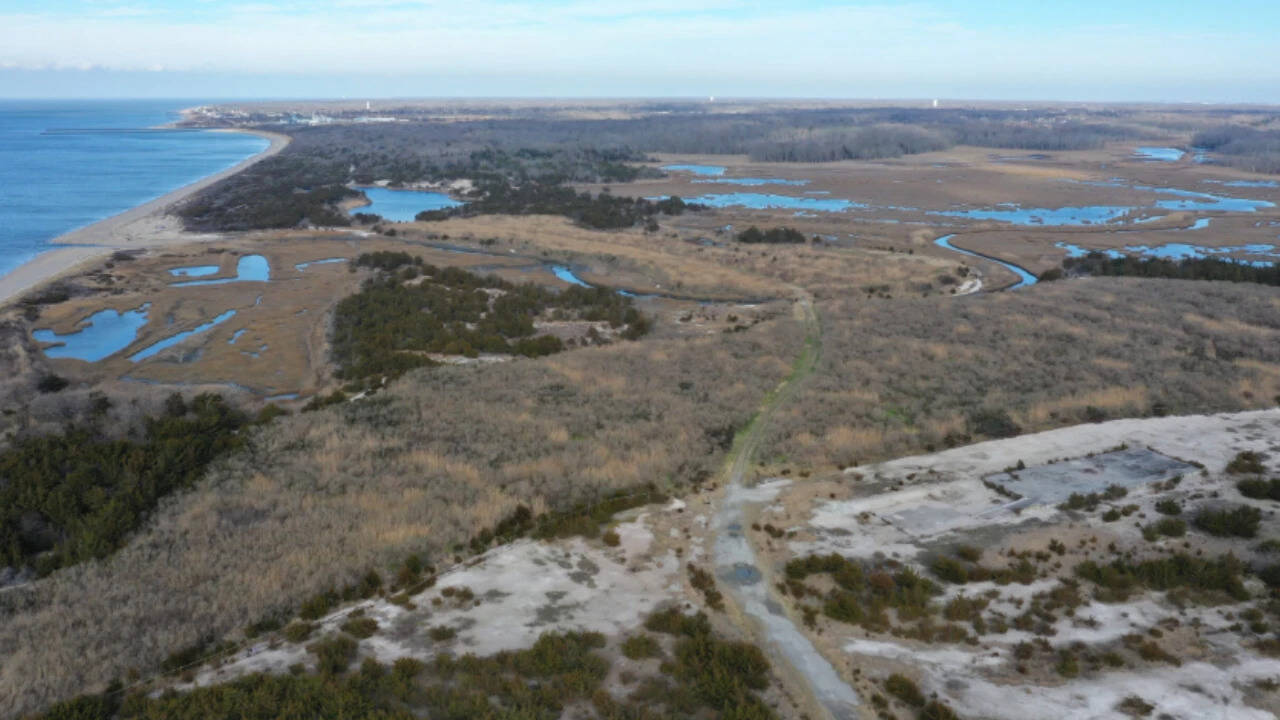
The wildlife response has come while construction is still under way.
On the coast of Cape May County, New Jersey, a stretch of degraded marsh and former industrial land is being returned to tidal function. According to the Times of India, citing the New Jersey Department of Environmental Protection's Spring 2026 project update, work began in February 2024 on a 290-acre section of the Higbee Beach Wildlife Management Area. The site takes in Pond Creek marsh, Davey's Lake and the land once occupied by the Harbison-Walker Magnesite facility and its associated landfill. The restoration is led by the department's Office of Natural Resource Restoration and Office of Coastal Engineering, with the state's Division of Fish and Wildlife.
The industrial history matters to the ecology. The plant extracted magnesium from seawater, and historical changes to the site cut the natural tidal connection between the marsh and Delaware Bay. With water movement restricted, parts of the marsh degraded and were increasingly taken over by common reed, Phragmites australis. The project's central aim is to restore tidal flow through much of Pond Creek marsh. Work began with site preparation, vegetation clearing and measures to control erosion and sediment, and a temporary ditch plug was built to disconnect tidal flow while construction proceeded.
The engineering has been substantial. A wider main channel was excavated to a length of approximately 3,561 feet, completed in November 2024. By November 2025, interior tributaries totalling roughly 14,220 feet, along with additional pond features, had also been dug. The work generated around 148,591 cubic yards of material, which the project reused rather than treating as waste, building elevated areas and habitat features within the marsh. Five sand-shell habitat islands were completed in August 2025 to provide nesting and feeding grounds for migratory birds, and high marsh, mudflats and open water have been created to widen the range of conditions available to wildlife. Dune systems were also built and planted with native beachgrass and panic grass.
The wildlife response has come while construction is still under way. The department's update records aquatic prey species, including mummichogs, in the new waterbodies, and these have drawn ospreys, great blue herons and bald eagles, along with egrets, kingfishers and gulls. The location gives the project added weight: Cape May is an internationally recognised stopover on the Atlantic Flyway, and the restored marsh is expected to serve raptors including peregrine falcons, merlins and kestrels. Snakes, raccoons, foxes, otters and beavers have also been recorded. Twenty-six dead trees, or snags, sourced from the site, have been placed along and within the new tributaries as resting and feeding habitat.
The design also balances tidal restoration against other pressures. An earthen berm system fitted with water-control structures regulates inundation in specific areas, protecting freshwater habitats while allowing tidal movement across the marsh, and the project aims to reduce flood risk in the surrounding watershed. Public access is part of the plan: trails, boardwalks, viewing platforms and bird observation structures. According to the Spring 2026 update, the heron canopy, pedestrian bridge, boardwalks and viewing blinds were completed during Summer 2026, with benches and interpretive signs still to come. The report does not give a final completion date or cost, and the long-term ecological results will only become clear as monitoring continues.



