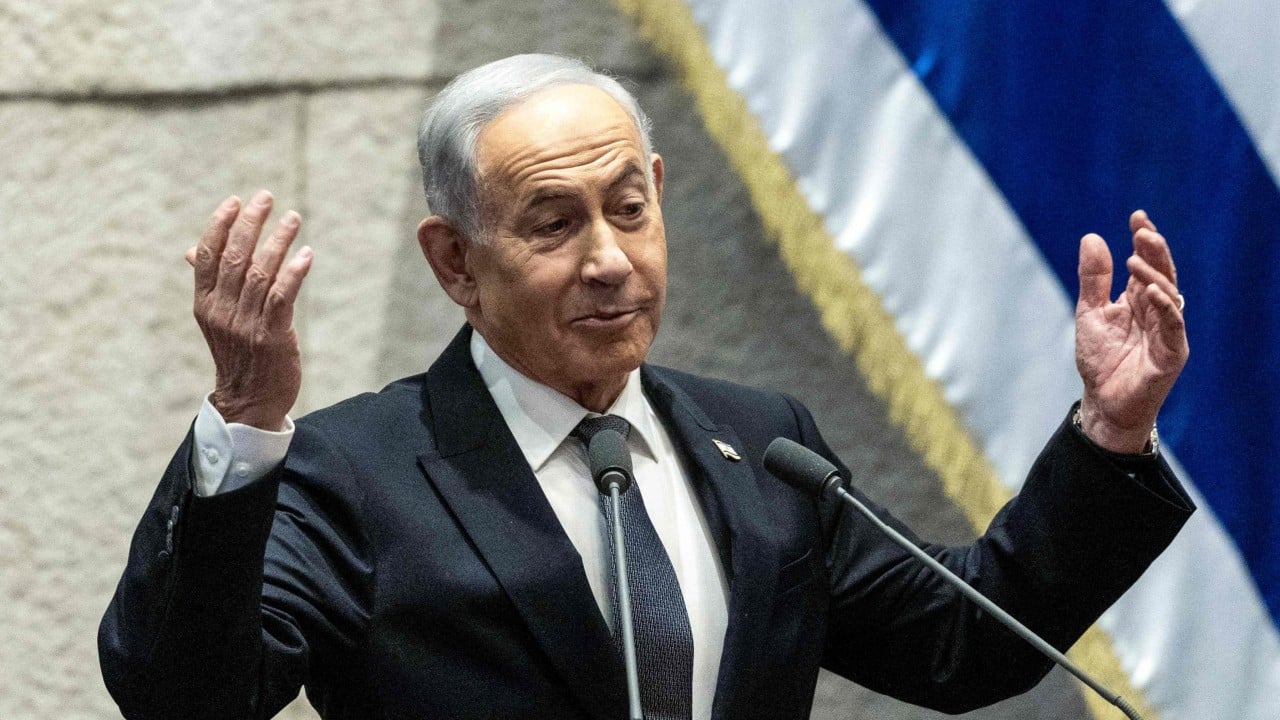
That expectation, if borne out, would mark a striking reversal for Netanyahu, who has long been the dominant figure in Israeli politics.
Benjamin Netanyahu, Israel's caretaker prime minister, has proposed a rotating premiership with his main rival Gadi Eisenkot, offering that Eisenkot serve first as prime minister while Netanyahu takes the role of alternate prime minister at the outset. According to the SCMP report, Netanyahu announced the proposal in a social media post on Saturday, framing it as a unity government and casting the concession as a duty of leadership, saying his responsibility required him to set everything aside and agree to the arrangement.
The report states that Eisenkot is expected to announce the formation of a new government within days. That expectation, if borne out, would mark a striking reversal for Netanyahu, who has long been the dominant figure in Israeli politics. The offer to let a rival go first, even within a rotation, suggests the arithmetic of coalition-building has left him without a straightforward path back to the premiership on his own terms.
Much remains unconfirmed. The material available is a headline and a short summary, and it does not specify the terms of the rotation, how long each leader would serve, which parties would join the government, or what cabinet posts have been agreed. Nor is it clear whether Eisenkot has accepted the proposal, whether the arrangement is conditional, or how the wider Knesset would receive it. The claim that a government will be announced within days is reported expectation rather than confirmed fact.
The development matters because it points to the end of a prolonged caretaker period and to a possible realignment of Israeli politics around a unity arrangement rather than another election. A rotation that installs Eisenkot first would place a former military chief at the head of government while keeping Netanyahu, the country's most experienced and most divisive politician, in the second seat. Whether such an arrangement proves stable, and what it means for policy on security, the economy and diplomacy, cannot be judged from the summary alone.