
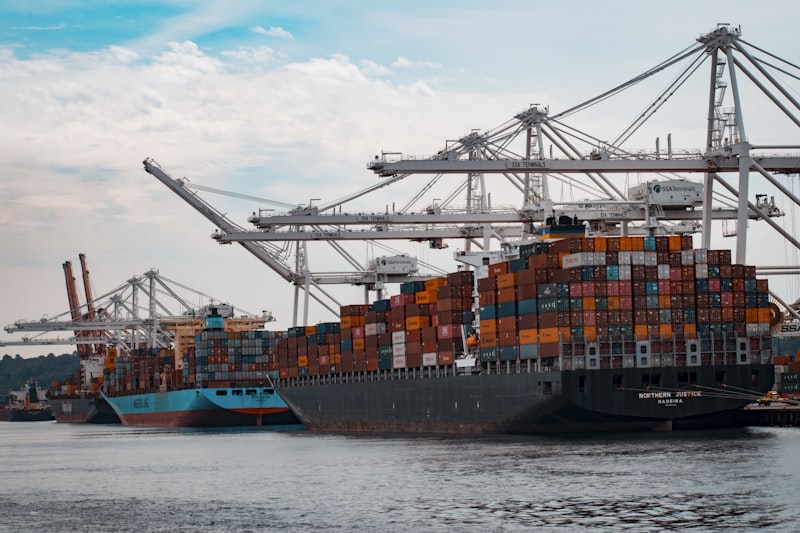
International law risks becoming a mere suggestion rather than a binding standard, as countries prioritize power projection over legal obligations.
The contemporary maritime landscape is marred by a paradox: while international law aims to safeguard the world’s oceans, its enforcement remains alarmingly inadequate. As geopolitical rivalries intensify and non-state actors proliferate, the seas—once considered a domain of cooperation—have increasingly become arenas of conflict and lawlessness.
Fundamentally, the United Nations Convention on the Law of the Sea (UNCLOS), established in 1982, was intended to create a comprehensive legal framework governing the world's oceans. However, the treaty suffers from both practical and political shortcomings that undermine its effectiveness. Notably, the absence of a centralized enforcement mechanism leaves member states to interpret and apply the conventions at their discretion, often resulting in selective adherence to the rules. This patchwork of compliance creates openings for illegal fishing, piracy, and territorial disputes, particularly in contested waters such as the South China Sea.
Moreover, the increasing militarization of maritime regions has exacerbated tensions. Nations are asserting their claims through naval displays and strategic posturing rather than diplomatic dialogue. The recent incidents involving naval confrontations between China and the United States underscore how national interests can override collective security mechanisms. In this context, maritime law risks becoming a mere suggestion rather than a binding standard, as countries prioritize power projection over legal obligations.
The evolution of technology also complicates the maritime domain. Advanced capabilities in surveillance and naval warfare have outpaced existing regulations, exposing significant gaps in the law's ability to manage new threats. Cybersecurity vulnerabilities pose risks not only to shipping but also to the integrity of maritime navigation systems, demanding a reevaluation of how maritime law can adapt to contemporary challenges.
To restore the credibility of maritime law, a multi-faceted approach is necessary. This includes fostering international cooperation to enhance enforcement capabilities, establishing clearer protocols for conflict resolution, and integrating technological advancements into the legal framework. In doing so, the international community can reinvigorate maritime law and ensure that the seas remain a space for safe passage rather than a battleground for power struggles.



