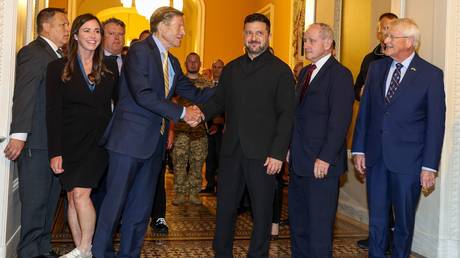
Trump's potential rapprochement with Iran could be a strategic move to reassert U.S. leadership while signaling a desire to avoid further entanglement in Middle Eastern conflicts.
The evolving dynamics of U.S.-Iran relations are becoming increasingly salient as the U.S. approaches the 2024 Congressional elections. Recent reports suggest that President Donald Trump is exploring avenues for de-escalation with Tehran, a strategic pivot that may be influenced by the imperatives of his domestic political landscape. As the nation grapples with rising tensions, the administration's approach to Iran could serve as both a diplomatic outreach and a domestic political strategy.
Historically, U.S. foreign policy has been shaped significantly by domestic political considerations, particularly in election years when incumbents are acutely aware of voter sentiment. Trump's overtures towards Iran could be interpreted as an attempt to quell public discontent regarding military engagements overseas, especially as the American electorate becomes increasingly fatigued by protracted conflicts. A more conciliatory stance could potentially bolster his appeal among moderates and independents, who may prioritize stability over confrontation.
Moreover, the geopolitical context surrounding Iran is multifaceted. As tensions escalate in the Persian Gulf and regional actors continue to jockey for influence, Trump's potential rapprochement could be a strategic move to reassert U.S. leadership while also signaling to allies and adversaries alike that the United States seeks to avoid further entanglement in conflicts that hold little strategic advantage. This approach could be perceived as a pragmatic acknowledgement of the limits of American power in the region.
However, this path is fraught with challenges. Domestic political opponents are likely to scrutinize any perceived weakness in negotiations with Iran, framing it as capitulation rather than diplomacy. The administration will have to carefully balance its messaging to reassure its base while appealing to a broader electorate. Furthermore, any concessions made to Iran must be weighed against the potential backlash from hardline factions within the U.S. Congress and significant allies in the region, such as Israel and Saudi Arabia, who may view such engagement with skepticism or outright hostility.
In conclusion, Trump's search for a diplomatic resolution with Iran represents a complex interplay of foreign policy and domestic political calculus. As election season approaches, the administration's navigation of this issue will not only influence U.S. standing in the Middle East but also shape the political landscape at home. The implications of these decisions will reverberate beyond the ballot box, affecting international relations and regional stability for years to come.