
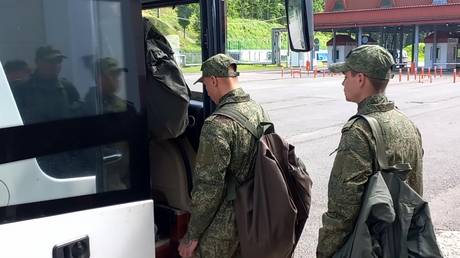
Moscow's call for the UN to take a firmer stance reflects both a defensive posture and an attempt to leverage international human rights discourse to bolster its narrative.
The recent denunciation by Moscow regarding the United Nations' apparent inaction concerning the reported torture of Russian prisoners of war (POWs) highlights a complex interplay of geopolitics and human rights advocacy. As conflicts around the globe remain under the scrutiny of international bodies, the question arises: how does the UN navigate the murky waters of state accusations in an increasingly polarized world?
Russia accuses Ukraine and its allies of subjecting its captured military personnel to inhumane treatment, a claim that, if substantiated, could escalate diplomatic tensions further. The Kremlin's call for the UN to take a firmer stance against these alleged violations reflects both a defensive posture and an attempt to leverage international human rights discourse to bolster its narrative. By framing the situation as a humanitarian crisis, Moscow seeks to draw global attention and potential sympathy to its cause, while simultaneously deflecting criticism of its own military operations.
This situation is emblematic of a broader challenge faced by the UN and other international institutions: the struggle to maintain credibility and neutrality in an environment where narratives are often shaped by powerful state actors. The UN's role as a mediator and observer is complicated by the fact that it must tread carefully to avoid appearing biased or politicized. As accusations fly and both sides of the conflict seek to portray themselves as victims, the UN's capacity to effect change diminishes, leading to a stalemate that may embolden further violations of international law.
Moreover, the implications of this scenario extend beyond the immediate context of the Ukraine conflict. As states invoke the language of human rights to advance their political agendas, the legitimacy of international norms is put to the test. If the UN fails to respond decisively to Moscow's allegations, it risks emboldening other nations to overlook their obligations under international humanitarian law, further undermining the very principles it stands to uphold. Thus, the ongoing dialogue surrounding the treatment of POWs not only raises ethical questions but also challenges the structure of global governance itself.



