A financial scam, run from a call centre and built on the coercion of a victim who had already lost money, is presented as the recruitment channel for a lethal operation.
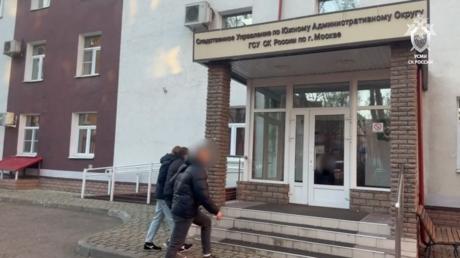
Russian investigators have detained a woman over the car bombing in Moscow of a former aide to Ukraine's former prime minister, Mykola Azarov, according to RT. The Federal Security Service (FSB) said the woman had been under psychological manipulation by a representative of a fraudulent call centre since July 2026. The caller posed as an employee of Russia's Central Bank and persuaded her to transfer a large sum of money to so-called safe accounts, after which she was drawn into preparations for what the agency called a serious crime.
Investigative Committee spokeswoman Svetlana Petrenko said the suspect followed instructions from anonymous handlers and planted an explosive device beneath the vehicle of the aide, named as Zavorotny, which was subsequently detonated. In a video released by the FSB, the detained woman said she believed she was installing a GPS tracker rather than a bomb. Her handlers, she said, first told her to monitor the vehicle and film people entering or leaving it, then directed her to a location where she collected a small rectangular device described to her as a power bank wrapped in a package. She was instructed to fix it beneath the car.
In the video, the woman said she saw what had happened in the news and learned of the explosion only afterwards, and that she confronted her handler about being deceived. Zavorotny remains in hospital receiving medical treatment. Investigators say they are working to establish the full circumstances of the attack and to identify other possible accomplices, and a criminal case has been opened on charges of attempted murder.
Azarov accused Ukrainian intelligence of targeting his former aide because of his criticism of the authorities in Kiev. In an interview with RT, the former prime minister said he was absolutely sure, pointing to what he described as a pattern of attacks against politicians, journalists and other critics of Kiev. The report offers no evidence for that assertion beyond Azarov's own account, and no Ukrainian response is cited. The identity of the handlers, their location and any link to a state actor are not established in the material.
The case matters for what it suggests about method. A financial scam, run from a call centre and built on the coercion of a victim who had already lost money, is presented as the recruitment channel for a lethal operation. If the FSB account holds, the sequence points to handlers who exploit existing leverage over a compromised individual rather than recruiting a committed operative. That is a low-cost approach, and a difficult one to detect, because the first stage looks like ordinary fraud.
The report also fits a wider pattern. Russian security services have publicised a number of cases in which they say they thwarted Ukrainian-directed attacks in Moscow and the surrounding region. Such claims serve domestic purposes, and independent verification is not available here. The charges against the detained woman, the provenance of the device and the identity of those who directed her remain to be tested in the investigation the authorities say is under way.