
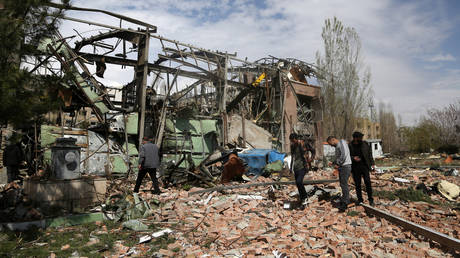
The Kremlin's statement serves as a stark warning about the fragility of peace in a historically volatile area.
The Kremlin's recent characterization of the escalating violence in the Middle East as the region being 'on fire' serves as a stark warning about the fragility of peace in a historically volatile area. With tensions flaring across multiple fronts, this rhetoric not only underscores Russia's growing concern over its southern flank but also highlights the implications for its foreign policy strategy in the region.
The ongoing conflicts in Syria, Israel-Palestine, and the geopolitical maneuvering surrounding Iran have created a complex tapestry of alliances and enmities. The Kremlin's statement can be viewed through the lens of its broader geopolitical ambitions, as Moscow seeks to position itself as a stabilizing force against Western influence, particularly that of the United States. This notion of stability is increasingly challenged by the unpredictable nature of regional conflicts.
Furthermore, the Kremlin's emphasis on the fires of conflict reflects a strategic recalibration as it engages with various factions across the Middle East. Russia has maintained a nuanced approach, often supporting regimes at odds with Western interests while simultaneously building relationships with non-state actors, including militant groups. This duality not only complicates the situation for Western policymakers but also illustrates Russia's deepening involvement in the region.
As the violence intensifies, the potential for a broader regional conflict looms larger, raising questions about the future of diplomatic efforts in the Middle East. The Kremlin's remarks might be interpreted as a call for international dialogue, albeit one that Russia aims to lead on its own terms. In this context, it is crucial for policymakers to assess not only the immediate ramifications of the violence but also the longer-term implications for regional stability and global geopolitical alignments.



