That arrangement concentrates escalation risk in Washington's hands, while leaving Tehran and the mediators in Doha to judge whether the threat of force is a bargaining chip or a prelude.
Israel has completed what the Yedioth Ahronoth newspaper describes as preparations for a renewed military attack on Iran, while the head of US Central Command, Admiral Brad Cooper, has presented President Donald Trump with options for resuming strikes. According to the report, cited by TRT World, the Israeli military has finalised both defensive and offensive readiness for a possible return to combat. The decision to launch an offensive, however, is said to rest with Trump rather than with Israeli leaders.
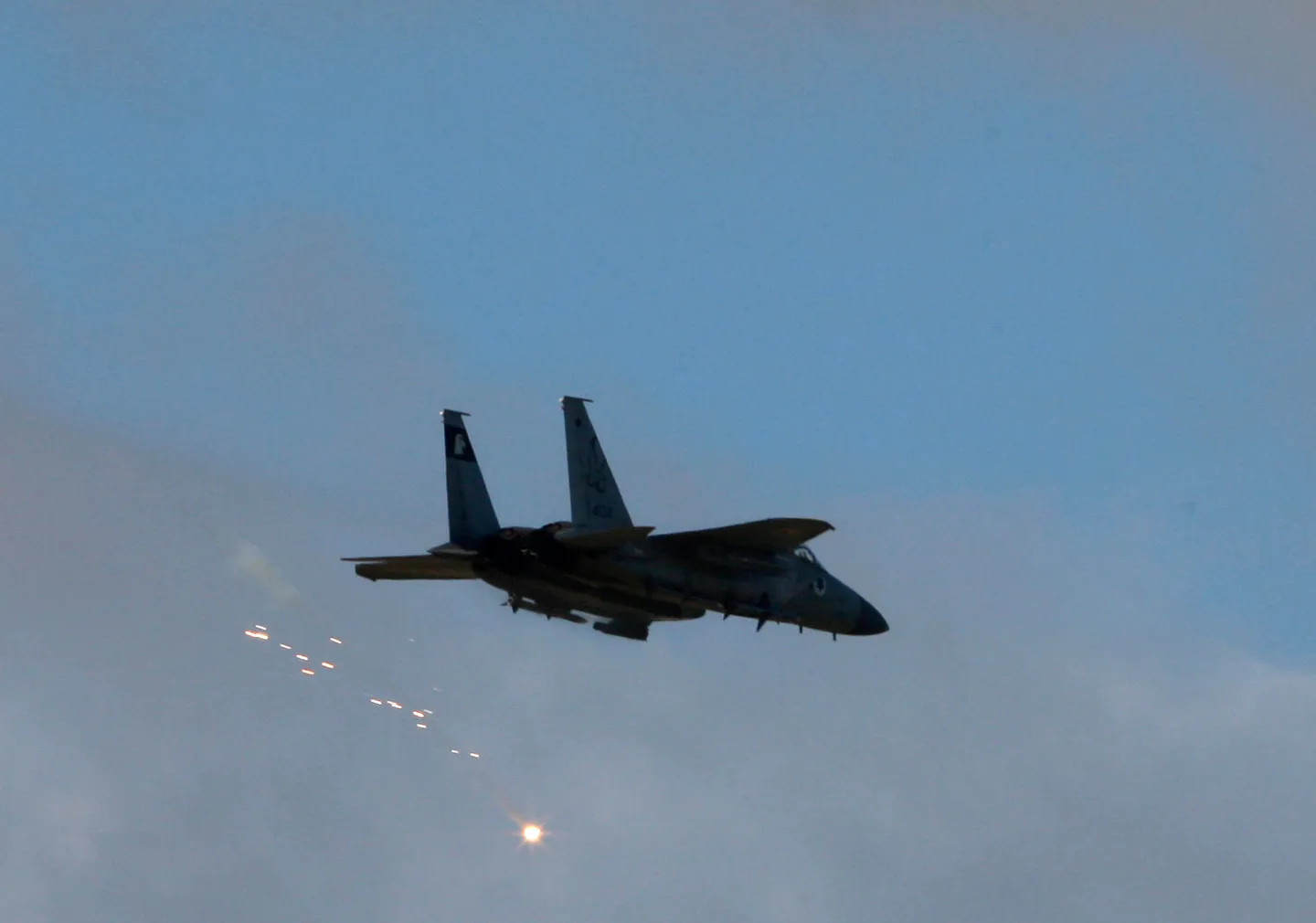
The report, which relies on unnamed political sources, says Israel is approaching another round of fighting but cannot initiate it unilaterally. Whether a campaign proceeds depends on Washington's course: pursuing an agreement with Tehran, or ordering coordinated strikes. Preparations are described as having moved beyond planning. The Israeli air force is said to have conducted long-range drills involving dozens of fighter jets and mid-air refuelling tankers across Syrian and Iraqi airspace towards Iranian frontiers, rehearsing possible strike corridors.
Cooper is reported to have tabled strike plans at a White House briefing attended by Defence Secretary Pete Hegseth and the Chairman of the Joint Chiefs of Staff, Dan Caine. No order to resume combat has been given. In recent days, ten US military transport aircraft are said to have landed at Israeli airbases delivering equipment, alongside broader American force reinforcements.
The report identifies a fundamental strategic dilemma: the absence of clearly defined US operational objectives. Strikes on Iranian nuclear facilities, missile infrastructure and military assets would not guarantee the collapse of the government or a change in policy, though Washington might use the threat of force to extract concessions. Officials also warn of regional escalation, with Hezbollah potentially entering the fray and stretching Israeli air defences and interceptor stockpiles.
Alongside the military track, indirect contacts mediated by Qatar are said to continue, exploring possible terms on Iran's nuclear programme, the Strait of Hormuz and economic incentives, with Russia and China mentioned as potential guarantors. Hostilities originally erupted on 28 February after joint US-Israeli strikes; an April truce broke down into renewed exchanges in July amid stalled diplomacy.
Much of this account rests on a single Israeli newspaper's unnamed sources, and the operational details, the extent of US reinforcements and the state of the Qatar-mediated talks are not independently confirmed. What the report does convey is a decision structure in which Israeli readiness is a lever and American choice is the hinge. That arrangement concentrates escalation risk in Washington's hands, while leaving Tehran and the mediators in Doha to judge whether the threat of force is a bargaining chip or a prelude.