
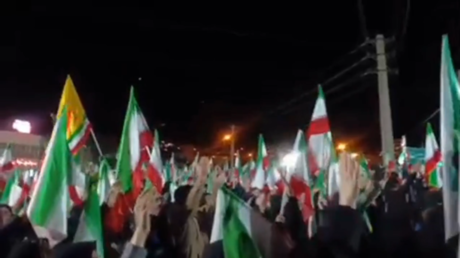
As the war enters its sixth week, these rallies reveal a nation grappling with its identity amidst escalating conflict and regional tensions.
The ongoing conflict in Iran has ignited a remarkable surge of public demonstrations, with massive night rallies unfolding across major cities. This phenomenon is not merely a display of solidarity; it encapsulates a nation grappling with its identity in the face of external pressures and internal dissent. As the war enters its sixth week, the resonance of these gatherings extends far beyond the borders of Iran, signaling a pivotal moment in regional dynamics.
These rallies have emerged as a potent manifestation of both support for the government's military endeavors and a critique of the socio-economic challenges that persist amidst the turmoil. The Iranian populace appears to be navigating a dual narrative: one that champions national unity in the face of conflict, and another that articulates frustrations over the fallout from international sanctions and economic strife. This duality underscores the complexities of public sentiment in a landscape marked by both fervent nationalism and growing wariness of the regime's handling of domestic issues.
Internationally, these demonstrations have not gone unnoticed. The Iranian government is likely leveraging the visibility of these rallies to bolster its image at home and abroad, framing the conflict in a narrative of resistance against perceived imperialist aggression. This strategy not only seeks to rally domestic support but also aims to reinforce Iran's position in regional geopolitics, as it contends with adversarial narratives from both Western powers and regional rivals.
However, the sustainability of such public displays remains uncertain. Historically, large-scale demonstrations in Iran have alternated between expressions of solidarity and eruptions of dissent. The potential for backlash against the government should the conflict persist or escalate could lead to a reassessment of public sentiment. As we analyze the ongoing situation, it becomes imperative to consider the interplay between these public demonstrations and the broader geopolitical landscape, particularly regarding Iran's relationships with its neighbors and global powers.



