The gap between the two positions is wide in both timing and substance, and the dispute now turns as much on security as on headline percentages.
More than 413,000 workers across Germany's industrial sector took part in strikes and rallies this week, according to the trade union IG Metall, which reported the figure on Friday. The union said it had staged more than 2,800 actions nationwide since Sunday, reaching carmakers, engineering firms, metal producers and suppliers after three rounds of wage talks failed to produce a deal.
IG Metall is demanding a 5% pay rise over twelve months for 3.7 million workers, along with higher apprentice wages, job guarantees and profit-sharing at profitable companies. Employers have offered a one-off payment in 2027 and a 1.3% raise from July 2028, which the union says amounts to a real-terms pay cut. The gap between the two positions is wide in both timing and substance, and the dispute now turns as much on security as on headline percentages.
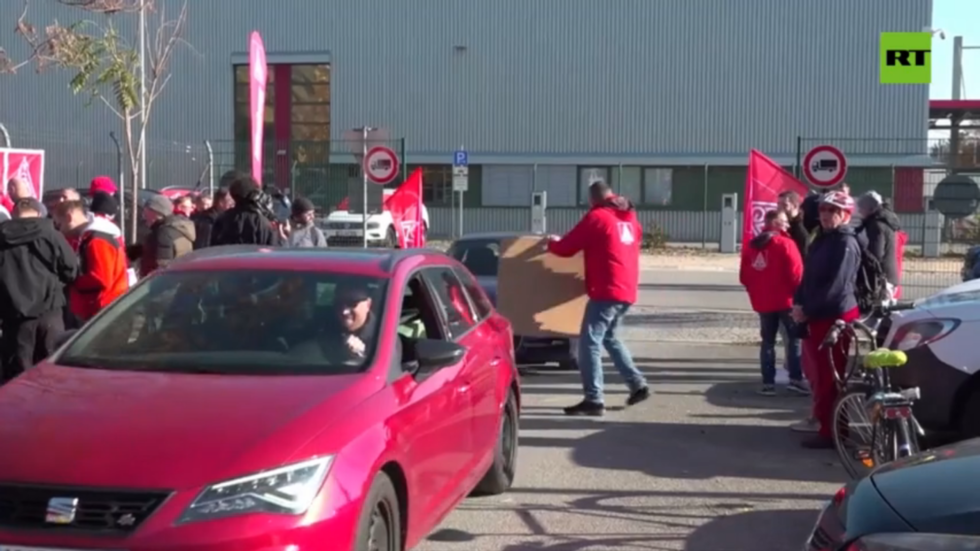
Friday's actions hit more than 30 companies in and around Nuremberg, including Bosch, Siemens, MAN Truck & Bus and Schaeffler. Footage from a Bosch plant showed workers blocking access and waving placards reading "Honk for the future" and "Honk for five percent". The protest came as Bosch plans to cut more than 900 jobs at the facility by 2029, a detail that gives the wage dispute a sharper edge.
In Saxony, Siemens and Thyssenkrupp workers staged a four-hour stoppage in Chemnitz and gathered outside the Siemens plant for a joint rally. A day earlier, around 6,500 Audi workers walked out at the Neckarsulm plant in southwestern Germany. According to the report, workers fear the plant could close by 2034 without a long-term production plan, given the Volkswagen Group's ongoing cost and capacity cuts.
Thursday also brought walkouts at Mercedes-Benz in Sindelfingen and protests involving 12,400 Airbus workers across four sites. Earlier strikes hit Audi in Ingolstadt, Porsche in Zuffenhausen, BMW plants in Bavaria and Volkswagen in Osnabrueck, where around 2,000 workers protested threatened job cuts. Thousands more joined actions at Ford, Mercedes, Daimler Truck and suppliers including ZF and Schaeffler.
The scale matters because IG Metall's wage settlement typically sets a benchmark for large parts of German industry, and a prolonged dispute would land on an economy already contending with restructuring in its car and supplier base. What is not yet known is whether the employers' offer will move, when talks resume, or whether the union will ballot members for all-out strikes. The reported figures come from the union itself, and the companies named have not commented in the material available.