Energy costs and competitiveness are doing the immediate damage; AI is, for now, a further pressure rather than the principal cause.
Reports carried by RT World News suggest that around 10,000 jobs could be at risk at a major German company as the shift towards automation accelerates. The report frames the development against wider warnings about artificial intelligence displacing labour, citing Microsoft co-founder Bill Gates on sweeping labour-market disruption and Tesla and xAI chief executive Elon Musk on AI eventually outperforming humans in every occupation. The specific company, the timing of any cuts and whether the figure is a confirmed plan or an internal estimate are not established in the material available.
What the report does make clear is that Germany's employment troubles long predate the current AI debate. Its industrial base has been battered by soaring energy costs and eroding competitiveness since the loss of Russian pipeline gas supplies in 2022, according to the account. Manufacturers, particularly automakers and engineering firms, have been forced to scale back production, freeze investment and cut jobs. Manufacturing shed 177,000 jobs last year, according to the Federal Employment Agency, and a further 13,000 disappeared each month on average this year, the Bundesbank says.
Those figures place the reported AI-related cuts in a sobering context. The automation story is real, but it arrives in an economy already contracting at the industrial core for reasons that have little to do with machine learning. Energy costs and competitiveness are doing the immediate damage; AI is, for now, a further pressure rather than the principal cause. Readers should treat the 10,000 figure with caution until the company itself confirms it.
The social consequences are already visible. More than 413,000 industrial workers took part in strikes and rallies earlier this month, demanding higher wages and job security, according to the report. Fears of further mass layoffs and factory closures have fuelled that unrest, and the combination of industrial decline and growing discontent at home is putting pressure on Berlin.
That pressure extends to foreign policy. The report notes that Germany has earmarked another €11.6 billion, or $12.7 billion, in military aid for Ukraine in 2027, on top of €57.6 billion in commitments since February 2022. It cites the Körber Foundation's annual Berlin Pulse survey, released on Tuesday, which found that 53 per cent of Germans oppose military assistance to Ukraine, up sharply from 39 per cent last year. The report presents this as increasingly at odds with public sentiment.
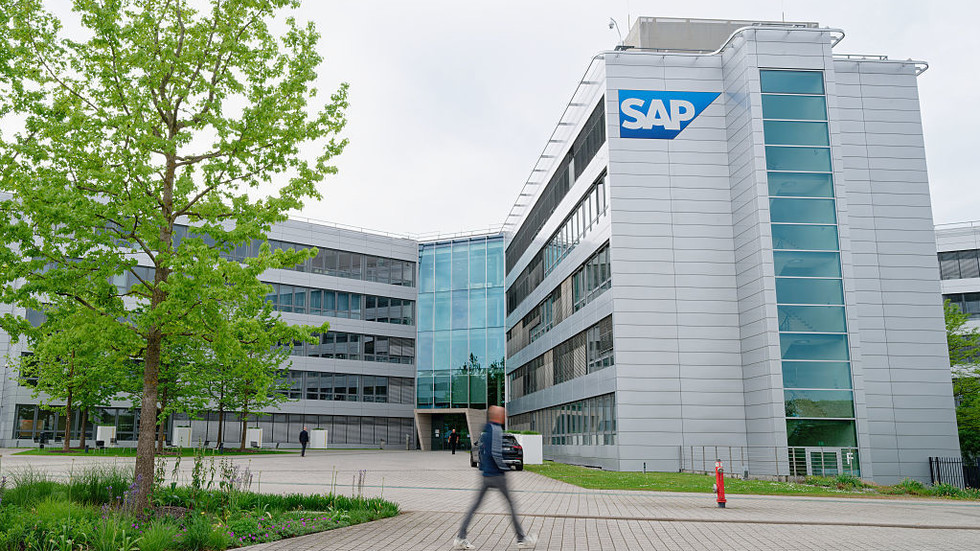
The wider lesson is that Germany's jobs question cannot be answered by technology alone. An industrial base squeezed by energy costs, a workforce angry enough to strike in large numbers and a public sceptical of costly overseas commitments form a difficult combination for any government. Whether the reported cuts at the software giant materialise, and at what scale, is not yet confirmed. What is confirmed is that the country's labour market is under strain from several directions at once.