
The most telling figure is the gap between what is given and what is asked for.
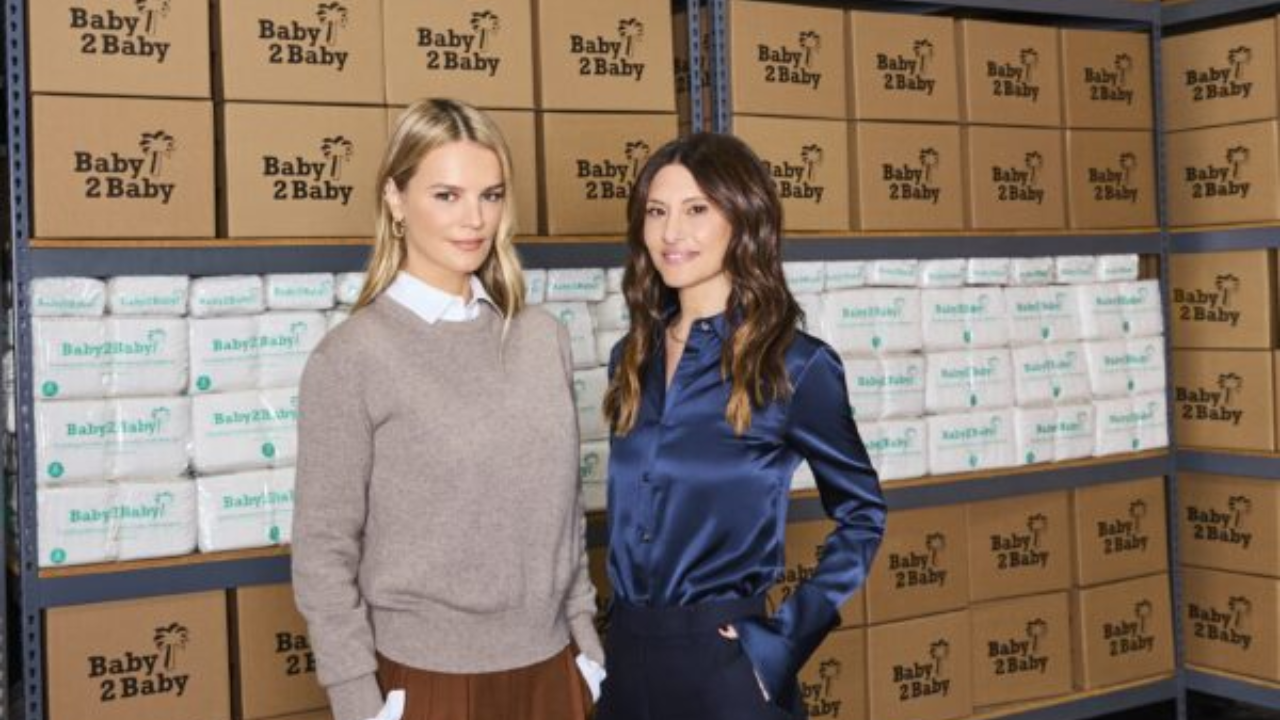
Fifteen years ago, Kelly Sawyer Patricof and Norah Weinstein took over a small volunteer-run nonprofit operating out of a storefront on Pico Boulevard in Los Angeles. According to the Times of India, citing Los Angeles Magazine, the organisation then supported around 500 children. Today Baby2Baby says it reaches approximately 1.5 million children annually across all 50 states, with warehouses around the country and roughly 80 full-time employees.
The milestone was marked on 14 November at the Pacific Design Center in West Hollywood, where the organisation's annual gala honoured the actor Demi Moore with its Giving Tree Award for her advocacy for children and families. Andrew Garfield presented the honour, Cardi B performed and Keke Palmer hosted. Forbes reported that the event raised more than $20 million, the highest total in its history, money earmarked for essentials including diapers, clothing, formula and emergency supplies.
The numbers attached to the anniversary are striking. Baby2Baby says it has distributed more than 850 million items over 15 years, including 400 million diapers, channelled through nearly 1,000 nonprofit organisations and government agencies, among them foster care agencies, schools, hospitals, homeless shelters, domestic violence programmes and disaster-relief groups. The co-CEOs told Forbes that nearly one in two families in the United States struggle to afford diapers. During the Covid-19 pandemic, when some parents were reportedly substituting newspapers and towels, the organisation began manufacturing its own, which Patricof said allowed production at around 80% below retail prices.
The model has also widened beyond children's everyday needs. Disaster relief has become a significant strand, with the co-CEOs saying Baby2Baby has responded to more than 150 disasters over the past decade, including wildfires, hurricanes and floods, and to 30 in 2026 alone by the time of the gala. Maternal health is another front: newborn supply kits covering diapers, wipes, hygiene and postpartum items are being piloted in 21 states, backed by a $9 million investment from New York State to supply 100,000 mothers giving birth on Medicaid, while a California programme aims to provide 400 diapers to every baby born at participating hospitals.
The most telling figure is the gap between what is given and what is asked for. The co-CEOs said Baby2Baby received requests for 1.9 billion diapers in 2026 alone, against the 400 million distributed over 15 years, and that around 10 million children remain on its waitlist. That arithmetic explains why a record gala total sits alongside an acknowledgement from its leaders that need far exceeds supply. It also points to the limits of philanthropy as a substitute for policy: an organisation built on donated essentials and celebrity fundraising can scale impressively, but it cannot close a shortfall of that magnitude on its own.
What the reporting does not establish is how the organisation's distribution is verified, how the waitlist is compiled, or how the $20 million breaks down against operating costs. Those details are not given in the source material. What is clear is the trajectory: a storefront operation serving 500 children became a national logistics network in 15 years, and the demand it now confronts is measured in billions.



