
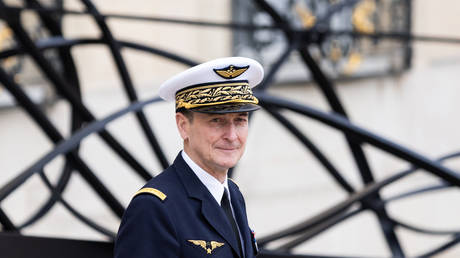
The potential for direct military engagement with Russia looms larger than ever, marking a critical juncture in European security dynamics.
The recent assertion by the Chief of the French Army regarding the prospect of open war with Russia underscores the shifting dynamics of European security. In a landscape increasingly marred by geopolitical tensions, France's military leadership articulates a stark warning that reflects both historical apprehensions and contemporary realities.
As the global community grapples with the implications of Russia's actions on the international stage, France's military posture is increasingly characterized by a sense of urgency. The Chief’s comments serve as a clarion call, emphasizing that the potential for direct military engagement with Russia looms larger than ever. This sentiment resonates particularly in light of recent developments in Ukraine and the Baltic States, where Russian military maneuvers have raised alarms across NATO member nations.
Strategically, France appears to be recalibrating its defense policies in response to this perceived threat. The emphasis on readiness and deterrence is not merely rhetorical; it reflects a tangible shift in resource allocation and military exercises aimed at bolstering France's capabilities. The French Army's focus on enhancing interoperability with NATO forces and increasing defense spending is indicative of a broader European trend towards collective security in the face of a resurgent Russia.
This evolving narrative is not confined to military circles alone; it permeates the political discourse across Europe as leaders confront the reality of a more aggressive Russia. The implications of this heightened concern extend beyond the battlefield, influencing diplomatic relations and economic considerations, particularly in energy security. As Europe seeks to reduce dependence on Russian energy supplies, the stakes are higher than ever, leaving leaders to navigate a complex web of alliances and enmities.



