
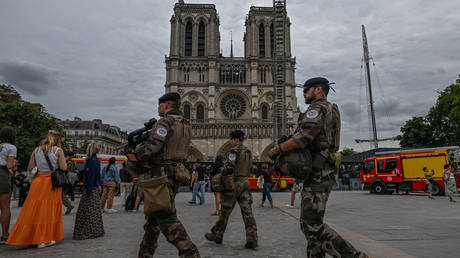
By turning to counterterrorism units, the French government is not merely responding to immediate unrest but is also sending a strong signal regarding the seriousness with which it views the threats posed by civil disorder.
In an unprecedented move, the French government has announced the deployment of counterterrorism troops to address escalating riots that have gripped cities across the nation. This decision reflects a broader trend wherein the state increasingly resorts to military solutions in civil unrest scenarios, a strategy that raises significant questions about the future of democratic governance and civil liberties in France.
The recent riots, sparked by a multitude of socio-economic grievances, are symptomatic of deeper societal fractures. Issues such as rising inequality, unemployment, and disillusionment with political leadership have collectively ignited public anger. By turning to counterterrorism units, the French government is not merely responding to immediate unrest but is also sending a strong signal regarding the seriousness with which it views the threats posed by civil disorder.
This deployment represents a dual-edged sword. On one hand, it aims to restore order and prevent further escalation of violence, which has already resulted in extensive property damage and civilian injuries. On the other hand, the military presence in civilian spaces could lead to heightened tensions and a sense of occupation among protesters. The historical context of France's tumultuous relationship with state power, particularly during events like the Yellow Vest protests, suggests that militarized responses may exacerbate rather than alleviate public dissent.
From a strategic perspective, the French government’s reliance on counterterrorism forces raises crucial questions about the efficacy of such measures. While immediate stability may be achieved, the underlying causes of unrest will remain unaddressed unless the government commits to meaningful socio-economic reform and dialogues with affected communities. The challenge lies not only in quelling the current disturbances but also in ensuring that the state does not lose sight of its democratic principles in the process.



