
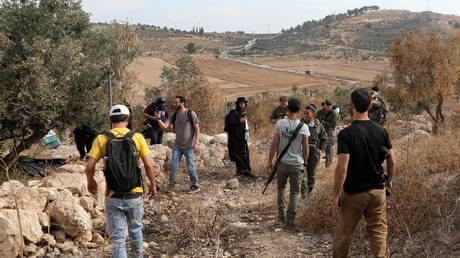
The attack underscores a palpable shift in the dynamics of the occupation, where settler extremism is not only tolerated but appears to enjoy tacit support from certain segments of the Israeli government.
The recent incident involving Israeli settlers attacking European diplomats in the West Bank signals a troubling escalation in tensions that could have far-reaching implications for both regional stability and international diplomatic efforts. As the landscape of Israeli-Palestinian relations continues to deteriorate, this event not only highlights the increasing boldness of settler violence but also raises critical questions about the effectiveness of diplomatic engagement in the region.
European diplomats, traditionally seen as mediators in the Israeli-Palestinian conflict, have found themselves increasingly targeted as tensions rise. The attack underscores a palpable shift in the dynamics of the occupation, where settler extremism is not only tolerated but appears to enjoy tacit support from certain segments of the Israeli government. The implications of this incident are manifold, as it not only jeopardizes the safety of diplomats but also risks alienating European nations that have historically advocated for a two-state solution.
In the context of international relations, the attack serves as a stark reminder of the frailty of diplomatic efforts in a landscape marked by violence and impunity. The European Union has long sought to play a constructive role in mediating the conflict, yet repeated acts of aggression against its representatives may compel European governments to reassess their engagement strategies. This could lead to a potential recalibration of foreign policy approaches towards Israel and the occupied territories, emphasizing a more robust stance against settler violence.
Furthermore, the broader implications of this incident extend to the Arab-Israeli peace process, which remains stymied by a lack of trust and a growing cycle of violence. The attack on diplomats could exacerbate existing rifts, both within Palestinian society and between Israel and its European partners. As the international community grapples with how to respond to increasing settler aggression, it must also navigate the delicate balance of supporting diplomatic solutions while condemning acts of violence that undermine peace efforts.



