What the meeting does establish is the cost of the chain's long decline, and the extent to which that cost now falls on staff, suppliers and shoppers rather than on its owners.
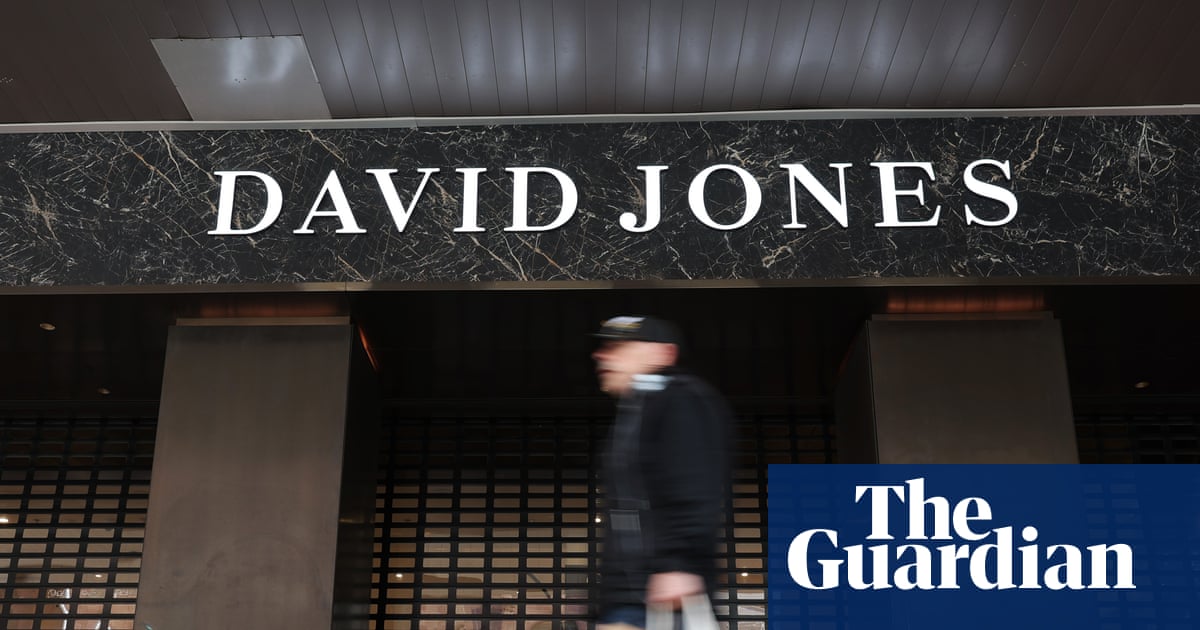
David Jones, the Australian department store chain that has traded for 188 years, entered voluntary administration earlier this month owing well over $400m, according to figures presented to creditors on Tuesday. Administrators McGrathNicol broke down the debt at the company's first creditors' meeting, which about 500 creditors attended, the Guardian reports.
The disclosed liabilities include an estimated $180m owed to suppliers and $11m to employees. A further $33m sits in unredeemed gift cards held by shoppers, which the retailer is still accepting. Significant sums are also owed to secured creditors, among them the chain's main financier, Hilco. The Guardian reports that the collapse followed years of steep losses that left the retailer falling behind on rent and supplier payments.
The scale of the losses is stark. David Jones recorded a net loss of $228m in the last financial year, according to updated figures given to creditors, and lost a further $69m in the first four months of the new financial year before the administration. Administrators told the meeting that funding pressures, compounded by reputational damage, were affecting the company's ability to secure stock for the Christmas trading period. Guardian Australia has reported that some suppliers are owed money for stock sent as early as April.
The restructuring is already under way. Half of the chain's 38 department stores are set to close by the end of the year, a move that will trigger mass job losses. Under a dual appointment, FTI Consulting has day-to-day control of operations while McGrathNicol seeks a buyer or fresh capital injection. The arrangement keeps the stores trading while the administrators test the market, but it also means the workforce and the supplier base carry the uncertainty of whatever outcome emerges.
For suppliers, the figures confirm a difficult arithmetic. Unsecured creditors typically recover a fraction of what they are owed, and the $180m owed to suppliers is not secured against the Hilco lending. The $11m owed to employees may fare differently depending on Australian entitlements, though the report does not set out how those claims will be treated. The gift card liability adds a further complication: shoppers holding $33m in cards are being encouraged to keep spending, which sustains footfall but competes with other claims on the estate.
What is not yet known is whether a buyer will emerge, on what terms, and how much of the debt will be recovered. The administrators have not announced a timetable for a sale, and the report gives no detail on the size of the Hilco exposure or the prospects for the remaining stores. What the meeting does establish is the cost of the chain's long decline, and the extent to which that cost now falls on staff, suppliers and shoppers rather than on its owners.