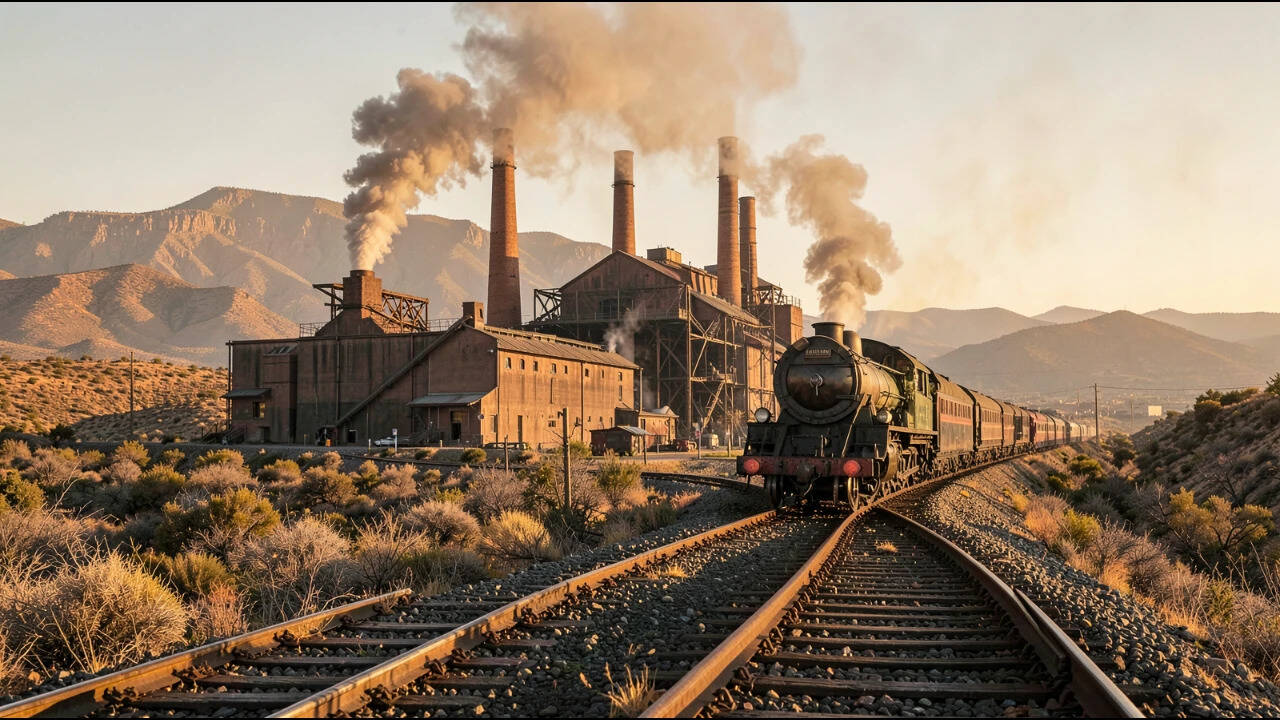
The remains of the Hampden Smelter are now central to Kuridala's historical significance, with the Queensland Heritage Register identifying the site as evidence of the copper industry that shaped the Cloncurry district.
Kuridala, a copper-mining settlement in Queensland, experienced a brief period of prosperity during World War I, driven by the Hampden Smelter and a railway connection. The town's population grew to around 1,500 residents by 1913, with businesses and public services developing to support the mining industry.
The Queensland Heritage Register notes that the smelter began operating in March 1911 and continued until 1920, allowing copper ore from nearby mines to be processed locally. The smelter's operations were crucial to the town's growth, with the railway extension serving the Hampden area opening in 1910. However, the town's fortunes changed after a cyclone damaged the smelter and its powerhouse in December 1918.
The cyclone forced the smelter to postpone operations until September 1919, and the company faced financial difficulties due to the end of British wartime price controls in 1918. The Queensland Heritage Register records that the Commonwealth Bank withdrew funds against copper awaiting export, leading the company to halt all operations. The smelter's closure in 1920 marked the beginning of the town's decline, with population figures differing between sources, ranging from 774 residents in 1921 to 800 in 1924.
The remains of the Hampden Smelter are now central to Kuridala's historical significance, with the Queensland Heritage Register identifying the site as evidence of the copper industry that shaped the Cloncurry district. The surviving industrial remains also have research potential for understanding the technology and operation of early 20th-century copper smelting. Kuridala's history serves as a record of the rise and fall of a mining settlement supported by railway access and industrial investment.
The town's decline was further accelerated by the relocation of facilities such as the hospital, picture theatre, and courthouse to Mount Isa. The Queensland Heritage Register records that the company ceased to exist in 1928, after offering its assets for sale in 1926 and their subsequent purchase by Mount Elliott. Today, Kuridala's history is a reminder of the transience of mining towns and the importance of preserving their heritage.