The wider question is whether private actors can enforce protection that regulators have not.
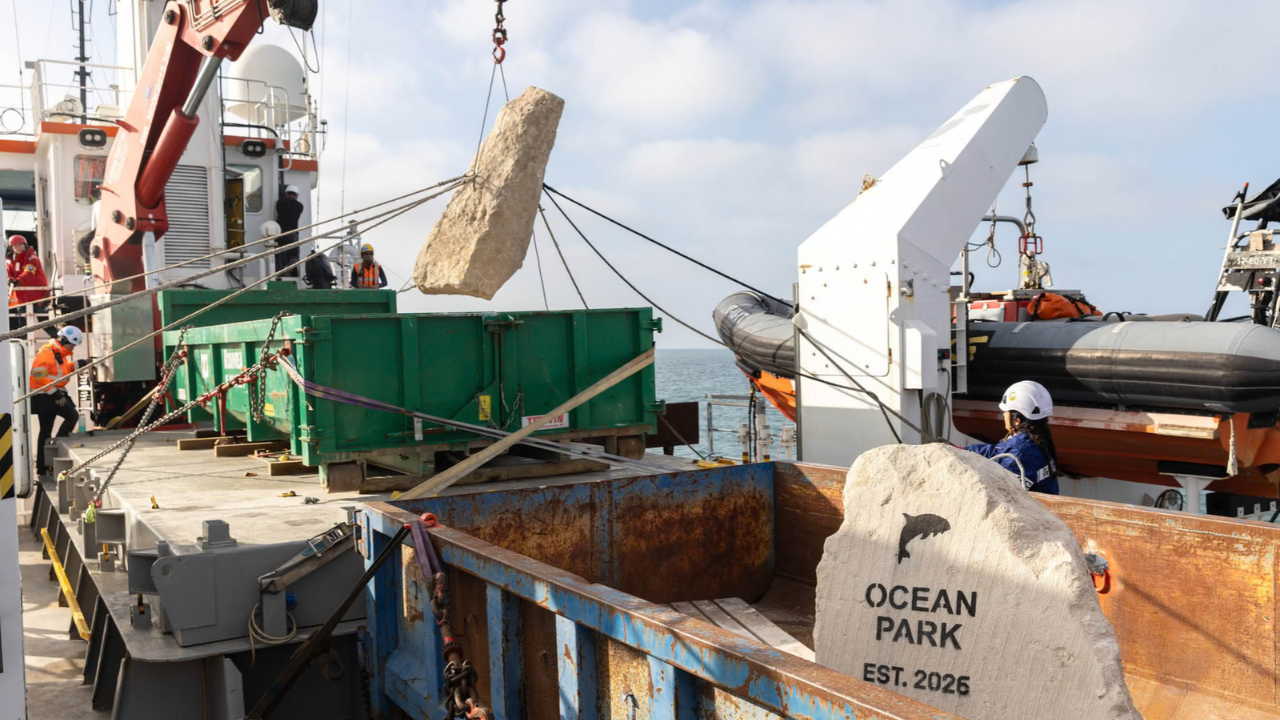
Greenpeace has placed nine limestone boulders, each weighing up to two tonnes, on the seabed of the Southern North Sea Marine Protected Area, according to a report in the Times of India. The rocks were deployed from the vessel Arctic Sunrise on 31 October, roughly 50 km off England's eastern coast, and the organisation announced the operation on 2 November. Greenpeace says the placements have effectively closed 116 square kilometres, about 45 square miles, of the protected area to bottom trawling.
The target is a fishing method that drags weighted nets across the seabed. According to Greenpeace UK, bottom-towed gear was used for at least 37,200 hours in the Southern North Sea site in 2025, more than at any other UK offshore marine protected area. Much of the site, despite its designation, carries no restrictions on bottom trawling or dredging. The organisation argues that this threatens harbour porpoises, which the Joint Nature Conservation Committee says are particularly important in the area, supporting approximately 17.5 per cent of the UK North Sea management-unit population. Greenpeace cites bycatch, noise, weakened visibility, habitat destruction and the depletion of prey species.
Will McCallum, Greenpeace UK's co-executive director, said the organisation warned the government in June that it would take direct action without stronger measures. "With our ship and a movement behind us, we're doing what the government isn't: Protecting our seas," he said. Actors Simon Pegg and Benedict Cumberbatch, along with other public figures and MPs, signed the boulders before deployment. Greenpeace plans to patrol the area with the Arctic Sunrise in the coming days.
The legal position is the crux. Greenpeace acknowledges it did not obtain a marine licence, describing the move as a last resort. Under Sections 65 and 66 of the Marine and Coastal Access Act 2009, depositing an object on the seabed from a vessel is generally a licensable activity unless an exemption applies. The Marine Management Organisation, which oversees licensing in England, has not announced an enforcement outcome. It published the nine reported boulder positions on 2 November after Greenpeace relayed coordinates to HM Coastguard, saying the information was shared for navigational safety, and cautioned that it had not independently verified all the coordinates.
The government, quoted by The Guardian, says legislation already protects marine sites, that damaging fishing has been banned in more than 100 locations and that further restrictions are under consideration. It stresses that activities at sea must be lawful and safe. What remains unknown is how the MMO will treat the unlicensed deposits, whether fishing vessels will avoid the area, and whether the boulders will survive shifting seabed conditions. The wider question is whether private actors can enforce protection that regulators have not.