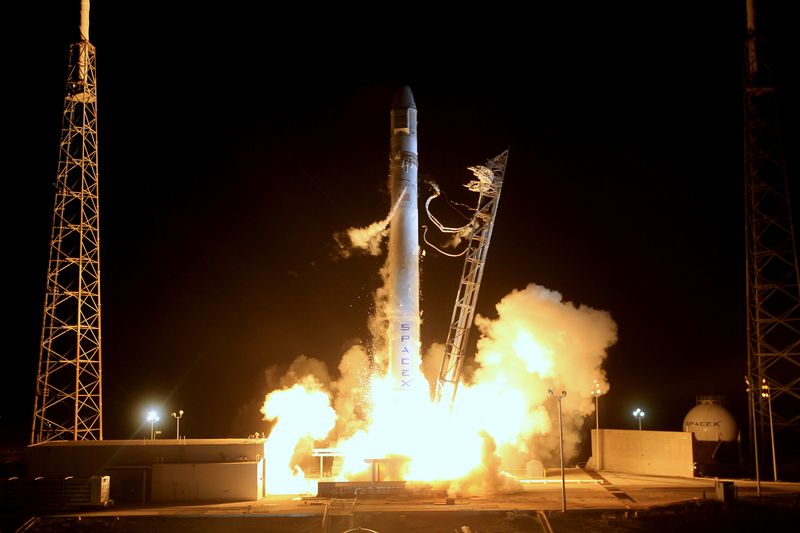
The implications of this potential IPO extend far beyond mere financial metrics, beckoning a reevaluation of international partnerships and competition in space exploration.
The prospect of SpaceX entering the public market through an initial public offering (IPO) represents not only a significant financial maneuver by Elon Musk but also a pivotal moment in the broader context of global space exploration and commercialization. As private enterprises increasingly dominate the aerospace sector, the implications of this potential IPO extend far beyond mere financial metrics, beckoning a reevaluation of international partnerships, competition, and regulatory frameworks within the burgeoning space economy.
SpaceX has long been at the forefront of a revolution in space travel, consistently pushing the boundaries of technology and reducing costs associated with access to space. Should the IPO materialize, it would solidify Musk's vision of a multi-planetary future while also positioning SpaceX as a key player in a rapidly evolving marketplace where private companies are challenging traditional government-led space missions. This shift invites a broader discourse regarding the role of private capital in space exploration, ushering in a new era where profit motives may diverge from national interests.
From a geopolitical angle, the implications of a successful SpaceX IPO could catalyze additional investment in space technologies and encourage competing nations to accelerate their own programs, amplifying the space race dynamics reminiscent of the Cold War. The dual-use nature of space technologies for both commercial and military applications further complicates this landscape, as nations grapple with the challenges of establishing frameworks for responsible governance in an arena where the stakes are increasingly high. Moreover, the potential for international collaboration on projects such as lunar bases or Mars missions could be hindered by heightened competition, prompting a call for renewed diplomatic efforts to ensure that space remains a domain for peaceful exploration.
In financial terms, a SpaceX IPO would likely attract significant interest from institutional investors, fueled by the company's track record of innovation and the growing appetite for space-related investments. However, such a move must be carefully calibrated against the backdrop of rising operational risks associated with space missions, fluctuating market conditions, and the inherent unpredictability of technological advancements. Investors will need to weigh the promise of extraordinary returns against the unique challenges that characterize the space industry.
Ultimately, Musk's foray into public markets with SpaceX could serve as a bellwether for the future of private enterprise in space. The successful navigation of this transition may offer a blueprint for other companies aspiring to capitalize on the vast potential of the final frontier, while also emphasizing the necessity for cohesive regulatory frameworks that can adapt to the rapid advancements of technology and the evolving geopolitical landscape. In doing so, it raises profound questions about the intersection of commerce, technology, and international relations in the 21st century.