The case matters because Nvidia sits at the centre of the most sensitive fault line in US-China relations
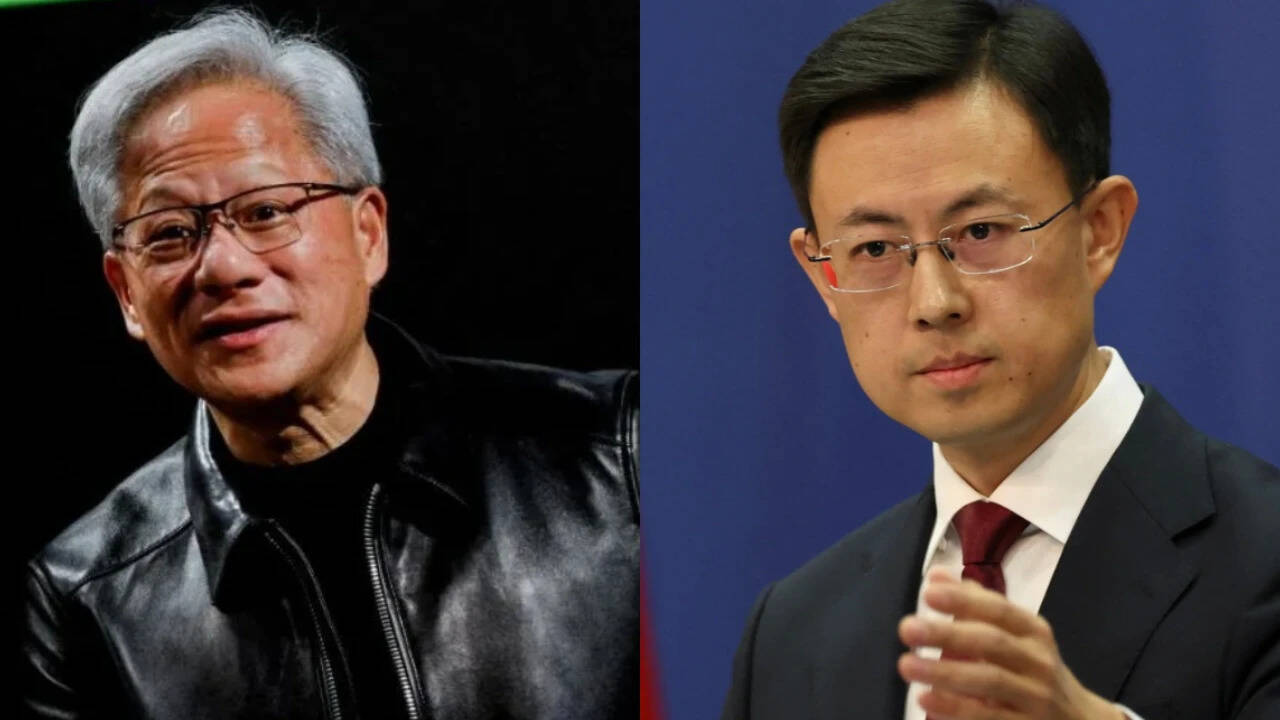
China has rejected allegations that it was involved in an espionage operation targeting Nvidia chief executive Jensen Huang, describing the claims as baseless. According to AFP, foreign ministry spokesperson Guo Jiakun told a media briefing that "the narrative of a so-called Chinese spy is entirely baseless vilification and smearing."
The denial follows reports that Nvidia's board has launched an independent investigation into claims that Huang was targeted by a foreign intelligence operation involving Alice Huang, a former executive at Megaspeed, a Singapore-based data centre company. US authorities reportedly suspect that she was recruited by China's Ministry of State Security to gather information about the Nvidia chief and the company. The allegations have also drawn scrutiny to Megaspeed, which buys Nvidia's AI chips and has been investigated over suspicions that it helped Beijing obtain access to advanced processors restricted from export to China.
Huang recently acknowledged in a message to Nvidia employees that he had been unfaithful to his wife, apologising to his family and colleagues without naming the woman involved. Nvidia's board said it had no reason to believe that US national security or the company's secrets had been compromised, but would examine all available information. Huang has backed the investigation and agreed to cooperate.
The case matters because Nvidia sits at the centre of the most sensitive fault line in US-China relations: the export controls that govern access to the advanced processors underpinning the artificial intelligence boom. Any suggestion that restricted chips reached Chinese hands, or that a foreign service sought intelligence on the company's leadership, would sharpen scrutiny of the chip trade and of the intermediaries that move hardware across borders. Megaspeed's role as a buyer of Nvidia's AI chips gives the allegations commercial as well as security weight.
It should be noted what remains unconfirmed. The espionage claims are reported suspicions attributed to US authorities, not established findings, and no charges have been described in the material available. The board's inquiry is independent and its conclusions are not yet known. Beijing's denial is categorical, but it does not by itself settle the question. The identity of the woman and the nature of any contact have not been publicly established beyond the reported account.
The immediate test is how the investigation is conducted and what it produces. A finding that no secrets were compromised would limit the damage to Nvidia's commercial relationships; a finding of foreign penetration would carry consequences well beyond one company, touching export policy, intelligence cooperation and the fragile management of technology trade between Washington and Beijing. Until the board reports, the allegations remain just that, and the burden of proof rests with those making them.