
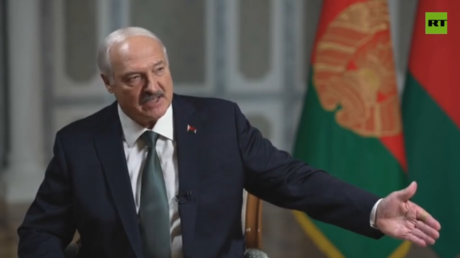
Lukashenko's remarks reflect a growing frustration among authoritarian regimes with the hypocrisy of U.S. foreign policy regarding democracy and human rights.
In a recent interview with RT's Rick Sanchez, Belarusian President Alexander Lukashenko leveled pointed accusations against the United States, asserting that the nation operates with little regard for democracy or human rights. His commentary reflects a broader sentiment echoed by various leaders in the global south, who increasingly view U.S. foreign policy as hypocritical, particularly regarding its promotion of democratic ideals.
Lukashenko's comments are not merely a defensive posture; they are emblematic of a growing frustration among authoritarian regimes that find themselves at odds with Western notions of governance. His critique draws attention to the inconsistencies in U.S. foreign policy, where strategic interests often overshadow the professed commitment to human rights and democratic principles. This disconnect raises critical questions about the effectiveness of U.S. diplomacy in fostering genuine democratic movements, particularly in regions where authoritarianism appears resilient.
While the West champions democracy as a universal value, the reality of international relations often reveals a more complex picture. As Lukashenko articulates, Western interventions frequently prioritize geopolitical aims over genuine support for democratic institutions. This situation creates fertile ground for authoritarian leaders to challenge Western rhetoric, framing their governance as a bulwark against perceived external threats.
Furthermore, Lukashenko's remarks resonate with a growing list of leaders who perceive democracy not as an end in itself but as a tool wielded by powerful nations to exert influence. This perspective is particularly salient in countries with historical grievances against Western intervention, where national sovereignty is often leveraged against external critiques of governance. The Belarusian leader's assertions underscore a critical turning point: the need for the United States to reassess its diplomatic strategies and the narratives it propagates regarding democracy and human rights.



