Rather than picking a side, the report says, Astana is playing the middle, drawing on both superpowers to develop its own capabilities.
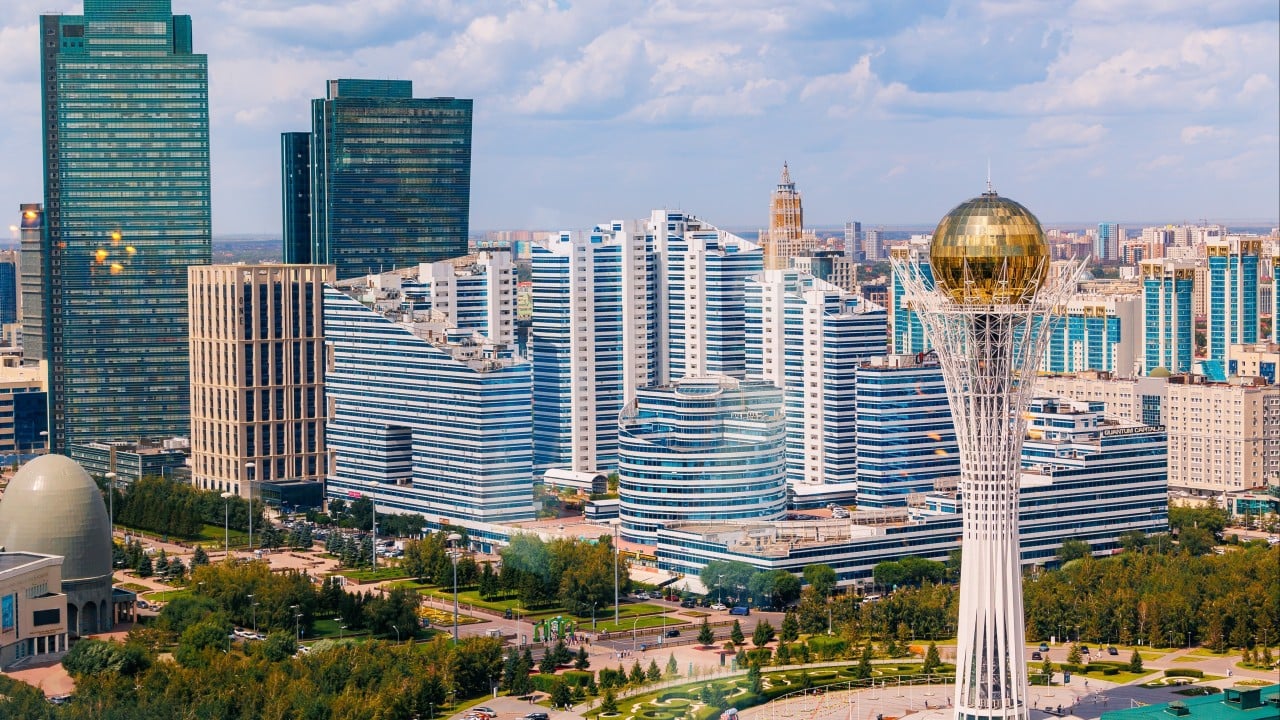
Jensen Huang, chief executive of the American chipmaker Nvidia, travelled to Astana for a fireside chat with Kazakhstan's deputy prime minister on "sovereign AI" and its role in the country's future, according to an account of the trip published by SCMP World. The visit, the report says, underscored the Kazakh capital's bid to reinvent itself as a regional computing hub, drawing on the country's abundant electricity supply to take a share of the global artificial intelligence boom.
Huang has repeatedly described AI as a new industrial revolution, framing data centres as "AI factories" that take in electricity and compute and manufacture digital intelligence. On that logic, energy-rich states such as Kazakhstan could become a new kind of export hub, selling computing power rather than the clothing, smartphones and cars that drove China's manufacturing rise. For Astana, the appeal is straightforward: turn domestic power reserves into server farms and export AI services, while building home-grown engineering talent and domestic technology firms.
The report describes that second ambition in more modest settings. At the Alem.ai International Artificial Intelligence Centre, which operates under Astana Hub, the government-backed technology and start-up platform, a free coding academy called Tomorrow School teaches AI through project-based, peer-to-peer collaboration rather than a traditional classroom. Down the hall, TUMO Astana introduces local teenagers to robotics and digital creativity. These classrooms, the report notes, offered a counterweight to the multibillion-dollar rhetoric surrounding Huang's stage appearance, and laid bare a harder reality: data centres can be financed and connected to grids relatively quickly, but building the talent pool, business ecosystem and innovation needed for a competitive knowledge economy can take decades.
All of this unfolds amid intensifying rivalry between Beijing and Washington. China's manufacturing base dominates electric vehicles and consumer electronics, while American firms hold the high ground in advanced semiconductors and AI architecture. In Kazakhstan, which shares a 1,780km border with China, the two spheres meet in real time: Chinese cars, from BYD to Changan, are a common sight on Astana's streets, while American chips underpin its digital ambitions. Rather than picking a side, the report says, Astana is playing the middle, drawing on both superpowers to develop its own capabilities.
The same dilemma surfaced a week earlier in New Delhi, where Sino-American friction dominated the sidelines of the Bloomberg New Economy Forum. Singapore's deputy prime minister, Gan Kim Yong, stressed the importance of preserving economic ties despite geopolitical fragmentation, while India's commerce minister, Piyush Goyal, spoke of rebuilding trade relations with Beijing even as New Delhi kept close strategic ties with Washington. Their remarks, as reported, reflected the central problem for middle powers: how to exploit the strengths of the world's two largest economies without falling captive to either.
What the report does not establish is whether Kazakhstan can convert its energy reserves into a sustainable AI ecosystem; it presents that as an open question. Nor does it quantify the investment involved, name the firms or institutions beyond those cited, or set out any agreements signed during Huang's visit. What it does show is a determination in Astana to stake a claim in the new industrial era while two rival superpowers race to write its rules.