
A bus carrying children moved through a city street without a functioning driver, and the first effective intervention came from a shopkeeper on a break.
On 19 October 2026, according to the Times of India, a 27-year-old Minnesota man was taking a break outside his family's business, Ya Bricks Snacks and Tobacco, in the Dayton's Bluff neighbourhood on the east side of St. Paul. A school bus rolled past with its door open. Something about the scene appeared wrong, and Ebro Ahmed ran after the vehicle, climbed through the open entrance and found the driver suffering a medical emergency, leaving the bus without proper control while 19 students from Battle Creek Middle School were aboard.
Ahmed had never driven a school bus. Surveillance footage, the report says, captured him working out the controls: he initially selected the wrong gear, briefly sending the bus backwards, before putting it into neutral and pulling the parking brake. The vehicle came to a halt and no students were injured. Paramedics took the driver to hospital, and the school district later confirmed that the driver had been discharged and was recovering at home.
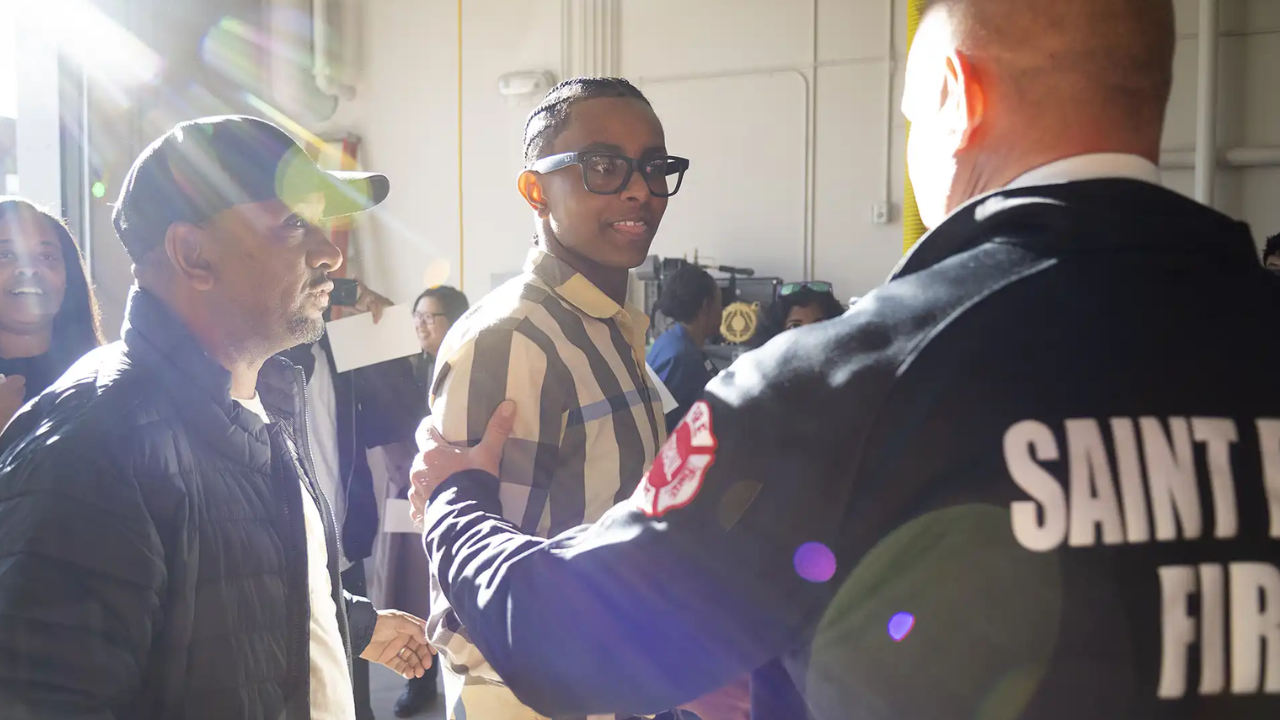
The recognition has been unusually broad for a single act of bystander courage. The Human Development Fund of St. Paul gave Ahmed its Hero Award, and the local media personality and philanthropist Sheletta Brundidge presented him with a $1,000 gift. The St. Paul City Council adopted a resolution on 4 November recognising his courage and quick response, and on 9 November the city declared the day Ebro Ahmed Day. A ceremony at Fire Station 7 brought him the St. Paul Fire Department's Heroism Award, a city proclamation presented by Mayor Kaohly Her, and a certificate of congressional recognition from the office of US Representative Betty McCollum. St. Paul Public Schools Superintendent Stacie Stanley was among those who acknowledged the significance of his intervention, highlighting how it had protected the futures of the 19 children and prevented a potentially devastating outcome for their families.
Ahmed credited his family, his faith and the community that raised him for shaping his response, and said he hoped the incident would give people a more positive impression of Minnesota and its communities. He is expected to meet the students he helped save at their school.
The story matters less for its mechanics than for what it shows about the space between an emergency and the institutions that normally respond to it. A bus carrying children moved through a city street without a functioning driver, and the first effective intervention came from a shopkeeper on a break. The awards that followed are a civic acknowledgement of that gap, and a reminder that the people closest to a crisis are often the only ones present in the seconds that count. What is not established in the reporting is how long the bus travelled before Ahmed reached it, what the driver's medical emergency was, or whether any review of school transport safety procedures has been opened. Those questions remain unanswered in the material available.



