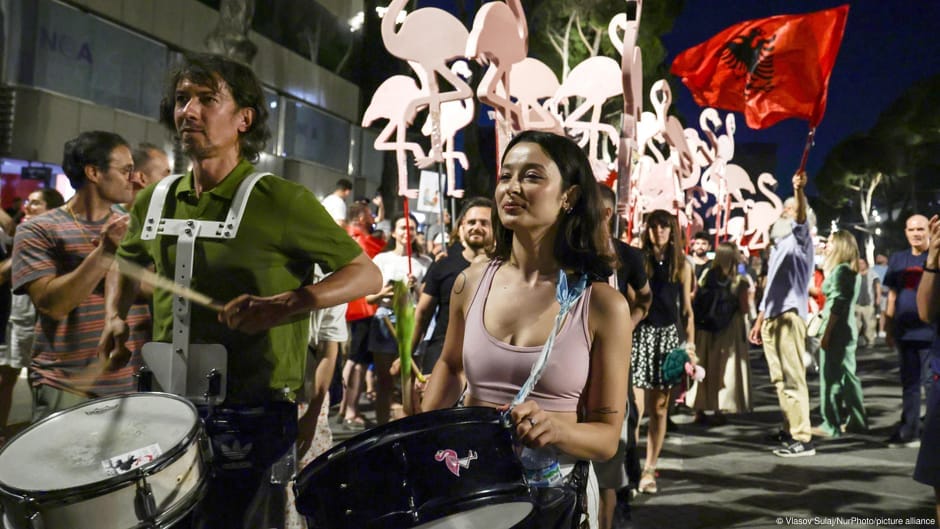
For three decades, Albania's leaders have relied on their citizens' suitcases, but now the country's students have burned that very luggage, symbolizing their desire to stay and bring about change.
Albania's youth are protesting in what has been termed the Flamingo Revolution, a social movement that began in May with demonstrations against a luxury resort and has since evolved into broader criticism against corruption and the government. According to the 2023 census, the population of Albania shrunk by about 420,000 between 2011 and 2023, primarily due to emigration, as young people felt they had little voice in the system.
The protesters, who do not feel represented by Albania's democracy, are driven by domestic issues: corruption, the high cost of living, and low wages. They have called for the resignation of Prime Minister Edi Rama, a transitional government, electoral reform, and fresh elections. The movement has support from people across the political spectrum, and while Rama has blamed foreign hands for the movement, there seems to be little evidence that external actors are orchestrating the protests.
Rama has rejected the calls for his resignation and has invited protesters to engage in dialogue, which they have so far refused. The prime minister has argued that his resignation would jeopardize Albania's bid to join the European Union by 2030, but the vast majority of Albanians are pro-European, including those on the streets and in the opposition. From the protesters' perspective, it is the government headed by Rama that is the real obstacle on the path to the EU.
The protests have been largely peaceful, but there have been clashes with police, hundreds of arrests, and many injuries. The movement has no leader, but it has brought attention to the need for change in Albania's government and economy. As one analyst noted, for three decades, Albania's leaders have relied on their citizens' suitcases, but now the country's students have burned that very luggage, symbolizing their desire to stay and bring about change.
The implications of the Flamingo Revolution are still uncertain, but it is clear that the movement has tapped into a deep-seated desire for change among Albania's youth. Whether the protests will lead to meaningful reforms or a change in government remains to be seen, but for now, the movement has brought a sense of hope and possibility to a country that has long been plagued by corruption and stagnation.