
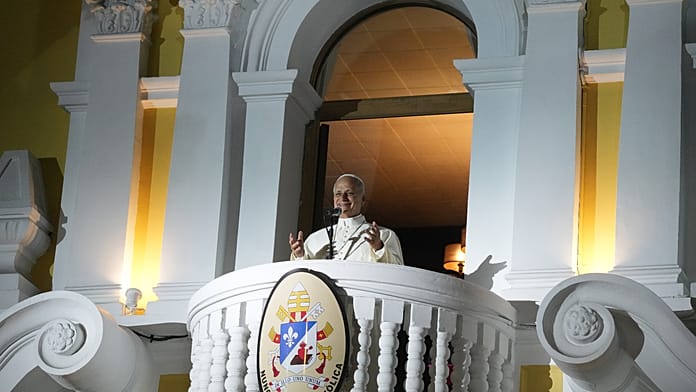
What the trip has already demonstrated is the standing of a pontiff whose authority in the region rests less on the office than on the two decades he spent there.
Pope Leo XIV has returned to Peru, the country he describes as his second homeland, and the welcome was on a scale that few foreign visits command. According to Euronews, citing Vatican estimates, around three million people lined the route of his motorcade through Lima, with the capital's streets decked in Peruvian and Vatican flags. Crowds chanted "The Pope is Peruvian!" as the 71-year-old, born in Chicago, passed by, according to AP.
The emotional register of the visit is unusual for a papal tour. Leo XIV spent more than two decades in Peru as a missionary and bishop, and acquired Peruvian nationality in 2015. At the Presidential Palace he sang the national anthem alongside President Keiko Fujimori and a children's choir, and in his first address to authorities and the diplomatic corps he said that much of the land "remains in me" and that his own story belongs to Peruvians. The years he spent sharing the lives and difficulties of the people, he said, helped shape him as a pastor. "I am also returning to my homeland," he told them, to applause.
The visit is the final leg of a Latin American tour that took him to Uruguay and Argentina first. Over almost a week he is due to travel from the Amazon to the Andes, including a visit to Cuzco at more than 3,400 metres above sea level and a return to Chiclayo, where he served as bishop for a decade. The itinerary is designed to trace the geography of his own ministry as much as the country's.
Yet the trip lands in a difficult moment. Euronews reports that Peru is marked by political instability, crime, rising living costs and recurrent natural disasters. The Pope called for citizens to be able to live and work "without fear", and urged the authorities to do more to prevent natural disasters and protect lives. He also asked Peru to confront the most painful chapters of its history with "justice and sensitivity" — a pointed appeal in the presence of President Fujimori, daughter of Alberto Fujimori, whose 1990s rule was marked by violence, human rights abuses and the fight against the Shining Path.
The political subtext extends beyond Lima. In Argentina, Leo XIV argued for a more inclusive economy and greater protection for the poor, migrants, the sick and prisoners, remarks interpreted as criticism of Javier Milei's spending cuts. Whether the Peruvian leg produces comparable friction with the government is not yet clear. Nor is it known what, if anything, the visit will change in a country whose problems are structural rather than symbolic. What the trip has already demonstrated is the standing of a pontiff whose authority in the region rests less on the office than on the two decades he spent there.



