
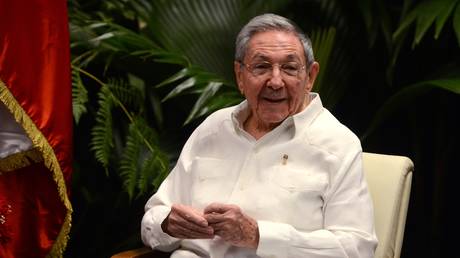
The arrest warrant for Raul Castro could be perceived as a step backwards in diplomatic relations, complicating efforts for dialogue and reconciliation.
The recent decision by a U.S. state to issue an arrest warrant for former Cuban leader Raul Castro marks a significant juncture in the complex tapestry of U.S.-Cuba relations. This development is not merely a legal maneuver but a reflection of broader geopolitical dynamics and the ongoing struggle for influence in the region.
Historically, the United States has maintained a contentious stance toward Cuba, rooted in ideological opposition to the communist regime established under Fidel Castro and perpetuated by the policies of his brother Raul. The timing of this warrant, however, raises critical questions about the motivations behind such an action. With the Biden administration's attempts to recalibrate U.S. foreign policy toward Latin America, particularly in light of increasing Chinese influence in the region, this arrest warrant could be perceived as a step backwards in diplomatic relations.
Furthermore, the implications of this warrant extend beyond bilateral relations. It may embolden hardline factions within the Cuban-American community, who have historically pushed for stronger measures against the Cuban government. Such actions could complicate efforts for dialogue and reconciliation, which have seen intermittent progress since the Obama administration’s thawing of relations in 2014.
Domestically, the warrant reflects a broader trend in U.S. foreign policy where legal instruments are employed to achieve strategic aims. This approach can undermine diplomatic negotiations by framing disputes in a legalistic context rather than a political one, potentially alienating moderates on both sides who seek a more constructive engagement. As the United States grapples with its foreign policy objectives, the challenge will be to balance domestic pressures with the need for a pragmatic strategy toward reconciliation with Cuba.



