
What the court record does establish is narrower but firmer: building without a survey carries risk that falls on the builder.
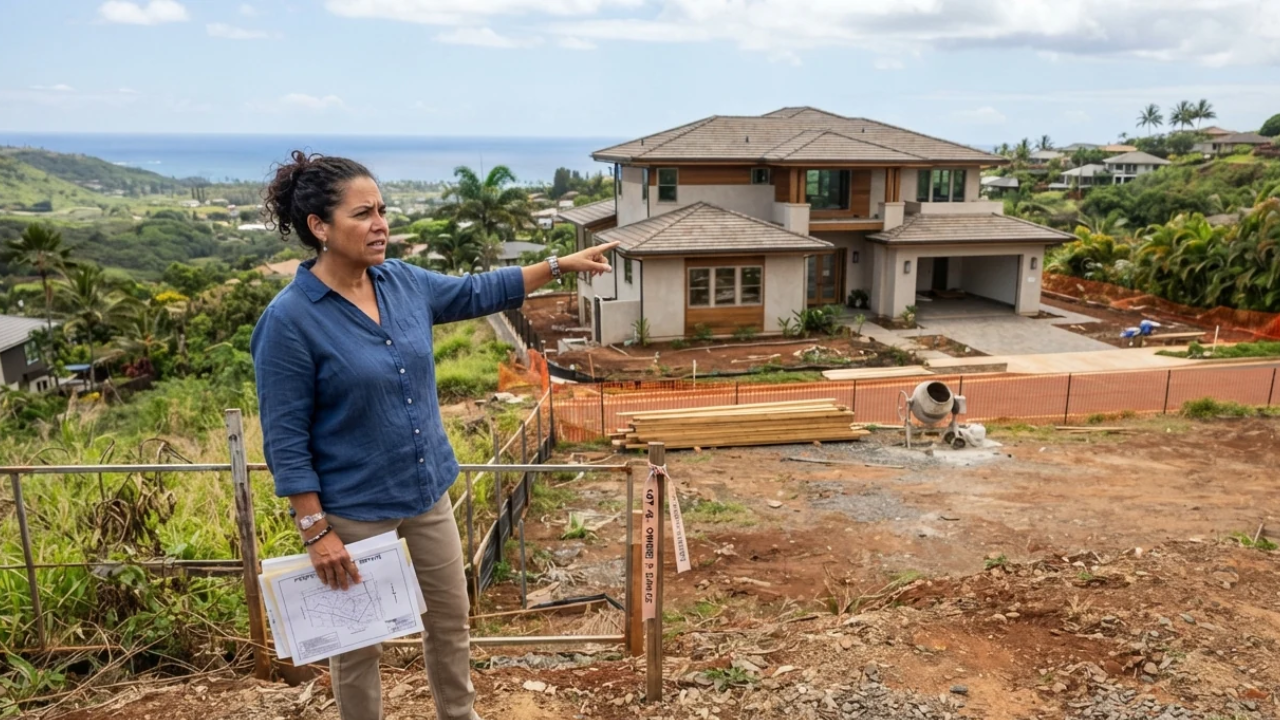
A California woman who paid about $22,500 for a vacant acre in Hawaii at a county tax auction in 2018 later discovered that a completed house, valued at roughly $500,000, had been built on the plot without her knowledge or consent. According to reports cited by the Times of India, drawing on Fortune, Hawaii News Now, KITV and the Associated Press, Annaleine 'Anne' Reynolds learned of the construction only in 2023, when a real estate broker contacted her to say he had sold a house standing on her land.
The property lies in Hawaiian Paradise Park, a residential subdivision in the Puna district of Hawaii's Big Island. The house was part of a wider project by Keaau Development Partnership, a local developer that had bought several plots in the subdivision and engaged PJ's Construction to build roughly a dozen homes. One of those homes was mistakenly erected on Reynolds' land, which was not among the developer's purchases. Her lawyer, James DiPasquale, described a dispute in which "there's a lot of fingers being pointed between the developer and the contractor and some subs".
The case turned on how the error happened and who should bear its cost. According to KITV, a Hawaii County judge found in June 2024 that the developer and construction company had assumed the risk of proceeding without a property survey; the contractor had reportedly relied on telephone poles to identify the plots. The judge ordered the house removed, dismissed the developer's case against Reynolds and rejected its argument that her title was invalid. The court did not, however, grant her request to restore the land's flora and fauna.
The developer had reportedly offered Reynolds a neighbouring parcel of comparable size and value, and she declined. DiPasquale argued that accepting a substitute would reward the practice of building on another person's land and then claiming its value. The developer's lawyer, Peter Olson, told the Associated Press that his client believed she was seeking to profit from a mistake by PJ's Construction, and noted that many parcels in the subdivision are similar in size and layout. An attorney for the contractor told Hawaii News Now that the developer had not wanted surveyors hired before work began.
The dispute was settled in 2025, according to court documents reported by Hawaii News Now. The terms were not made public. The Times of India notes that it has not independently verified the claims of the parties.
The episode matters beyond one acre in Puna. It shows how quickly a tax-auction purchase can become entangled in a construction chain, and how far the consequences travel when boundaries are assumed rather than measured. It also illustrates the exposure of absentee owners, who may learn of changes to their land years after the fact. The confidential settlement leaves the financial outcome unclear, and it is not known who bore the cost of removing the house or what condition the land is now in. What the court record does establish is narrower but firmer: building without a survey carries risk that falls on the builder.



