The significance of the hospital lies less in its size than in what it represents: a rare case of sustained civic fundraising producing permanent specialised infrastructure for a condition that attracts little commercial investment.
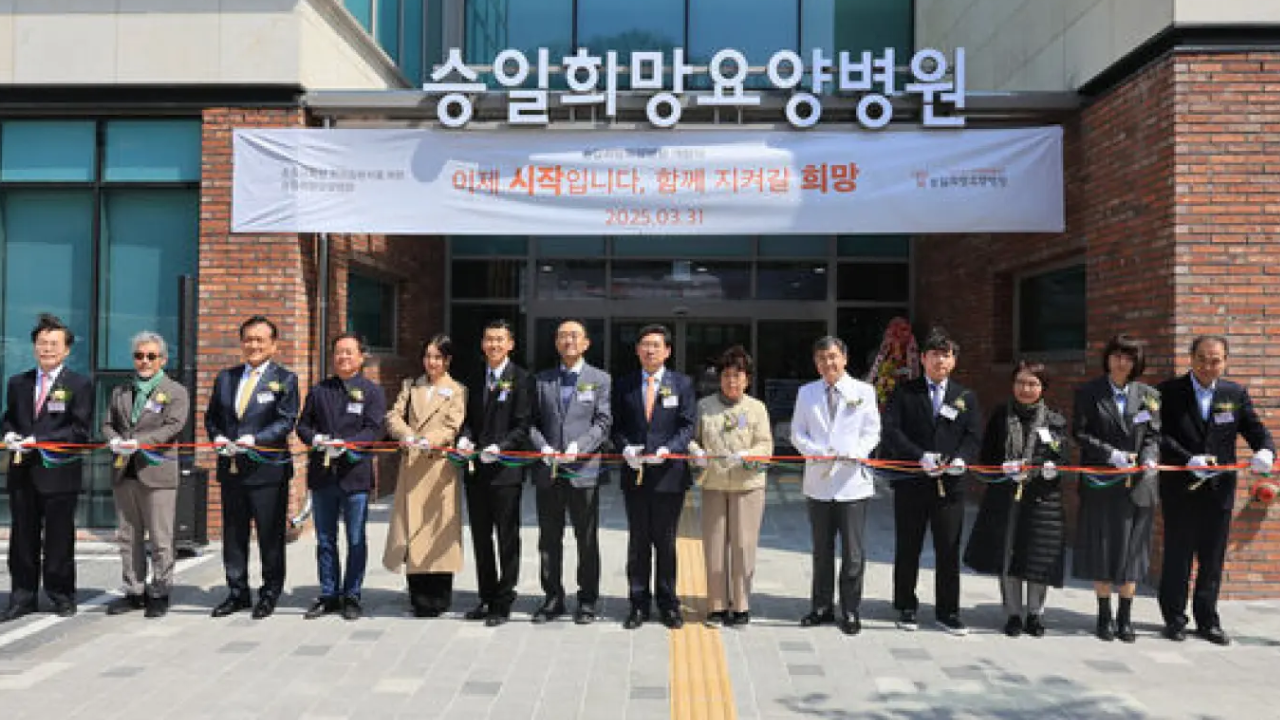
South Korea has opened its first specialised nursing hospital for patients with amyotrophic lateral sclerosis and other severe neuromuscular disorders, according to reports in The Korea JoongAng Daily, The Korea Times, Yonhap News Agency and Star Today. The Seungil Hope Nursing Hospital, in Yongin, Gyeonggi Province, began receiving patients on 31 March 2025 after a fundraising effort that stretched back to 2011 and drew contributions from around 350,000 individual donors.
The project's origins lie with Park Seung-il, a former professional basketball coach diagnosed with ALS at the age of 31, and the singer Sean. Together they established the Seungil Hope Foundation, which spent more than a decade campaigning for better care for a patient group with limited options. The Korea Times reports that the hospital's construction required nearly 24 billion won. The final figure was 23.9 billion won, of which roughly 12 billion won came from government funding and 11.9 billion won from donations, with corporate partners also contributing. Park did not live to see the facility completed; he died in September 2024, about six months before it opened.
The building covers some 5,000 square metres, with two basement levels, four floors above ground and 76 beds. It includes rehabilitation facilities, family visitation areas and spaces for cultural and recreational activities. According to Yonhap, it is designed to provide specialised medical care and support for people with severe muscular conditions. ALS progressively affects the nerve cells controlling voluntary muscle movement, and patients can lose the ability to walk, speak, swallow and breathe unaided, often requiring ventilators, feeding tubes and continuous medical assistance. The hospital aims to meet those needs through round-the-clock care, specialised caregiving and rehabilitation, while easing the burden on families.
The campaign drew public attention through celebrity involvement. The actor and singer Cha Eunwoo, a member of the group ASTRO, was nominated for the 2023 Ice Bucket Challenge by actor Lee Jung-jae and chose to donate 10 million won rather than take part in the stunt. Star Today reports that he urged greater public attention towards people affected by rare and incurable illnesses and their families, and nominated fellow ASTRO member Yoon San-ha and actors Moon Ga-young and Park Gyu-young to carry the campaign forward. The singer Sean helped lead fundraising over the years, including the revival of the Ice Bucket Challenge in South Korea. More than 200 people, among them donors, healthcare professionals, public officials and celebrities, attended the opening ceremony.
The significance of the hospital lies less in its size than in what it represents: a rare case of sustained civic fundraising producing permanent specialised infrastructure for a condition that attracts little commercial investment. For families who have long shouldered care at home, the facility offers institutional support where previously there was little. The reports do not specify the hospital's operating costs, how places will be allocated or funded over time, or whether similar facilities are planned elsewhere in the country. Those questions will determine whether the Seungil model can be repeated, or whether it remains a singular achievement built on one coach's determination and the generosity of hundreds of thousands of strangers.