The route has grown more prominent as tighter border controls and closer cooperation between European countries and North African states appear to have pushed some migrants away from the central Mediterranean and towards the Atlantic.
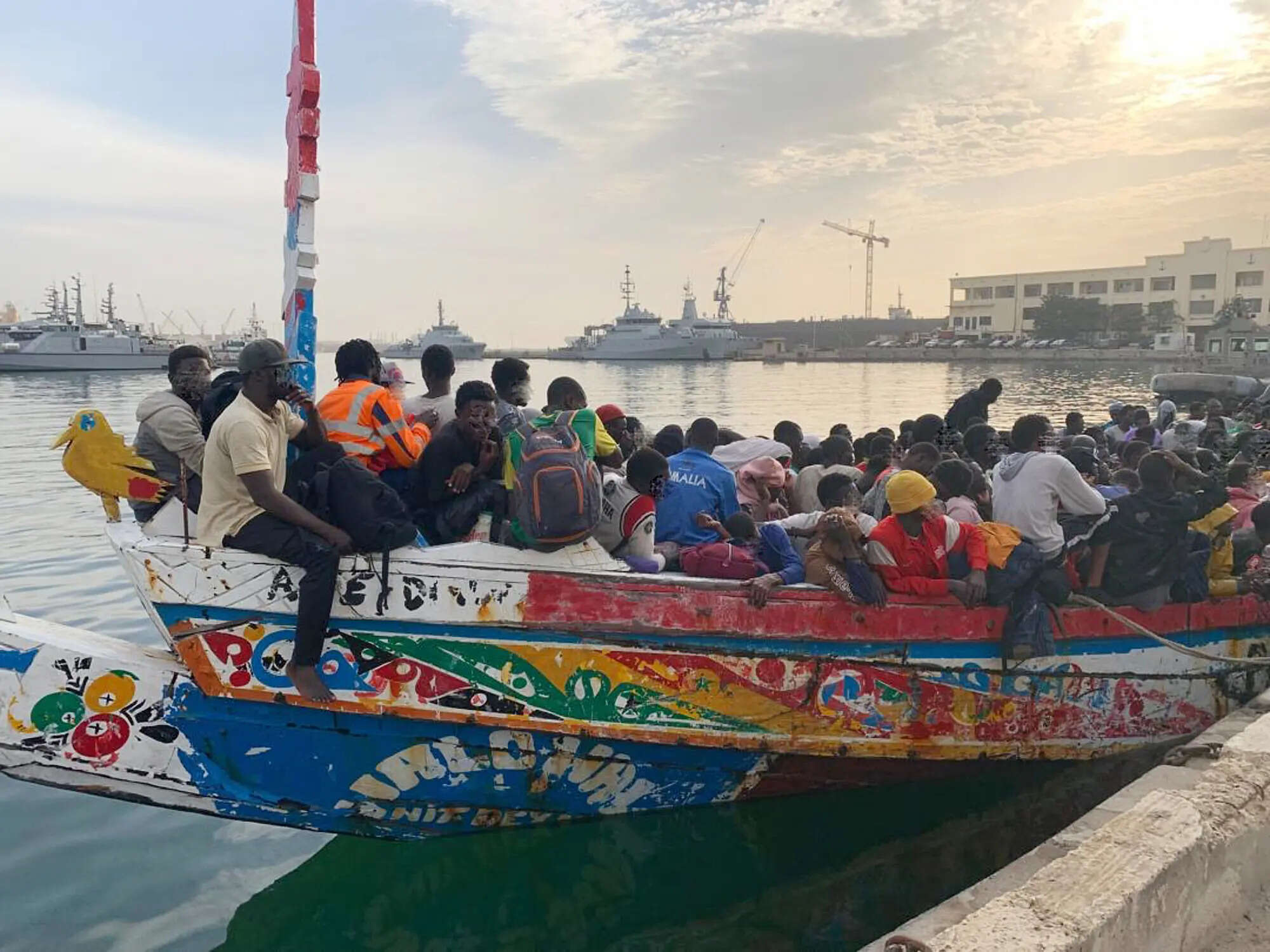
At least 39 people died when a small wooden vessel carrying migrants towards Spain's Canary Islands capsized off Senegal, according to the Senegalese Press Agency, which cited an official source. Senegal's interior ministry said one person had been rescued, and that the number still missing was not yet known. Search operations continued after the boat overturned between Dakar, the capital, and the northern city of Saint-Louis.
Saliou Diouf, founder of the Senegalese migrant aid group Boza Fii, told the news agency AFP that all the bodies recovered so far were those of Senegalese nationals. The identities and nationalities of the remaining passengers were yet to be established. President Bassirou Diomaye Faye expressed condolences to the families of the dead and appealed to citizens not to risk their lives at sea, promising in a statement on X to step up action against the networks arranging the crossings. "We will relentlessly continue the fight against those who organise these crossings and the work that gives our young people reasons to hope here," he said.
The tragedy draws attention once more to the Atlantic route. The Spanish migrant rights group Walking Borders recorded 635 deaths on the crossing to the Canary Islands between January and May 2026, the highest toll among the routes it monitors, and estimated that around 21 people died for every 100 who reached the islands. The route has grown more prominent as tighter border controls and closer cooperation between European countries and North African states appear to have pushed some migrants away from the central Mediterranean and towards the Atlantic.
The pressure is visible on the islands themselves. Authorities on El Hierro declared a state of emergency on Saturday after more than 3,300 migrants arrived in around 30 boats since the start of November, a number equivalent to almost a third of the island's population. Fernando Clavijo, president of the Canary Islands regional government, called the situation "absolutely unsustainable", according to Reuters. Senegalese authorities said they had intercepted another boat on Friday, preventing 142 migrants from making the journey; the group included 23 women, two babies and two other children, and police said the passengers came from Senegal, Gambia, Guinea-Bissau, Guinea and Nigeria.
The drivers are largely economic. The International Organization for Migration cites limited job opportunities, family pressures and established migration networks, while Senegal's statistics agency recorded that nearly one in four young people was unemployed in the second quarter of 2026. That figure underlines the challenge facing President Faye, who came to power in 2024 with overwhelming support from a predominantly young electorate. His interior ministry said on Sunday that it would continue efforts to dismantle smuggling networks, including through stronger cooperation with neighbouring states.
What remains unconfirmed is the total number of people who were aboard, and therefore the final death toll. The casualty figure may rise as search operations continue and as the missing are accounted for.