
Until they do, or until evidence emerges from the investigation, the connection remains a question rather than a conclusion.
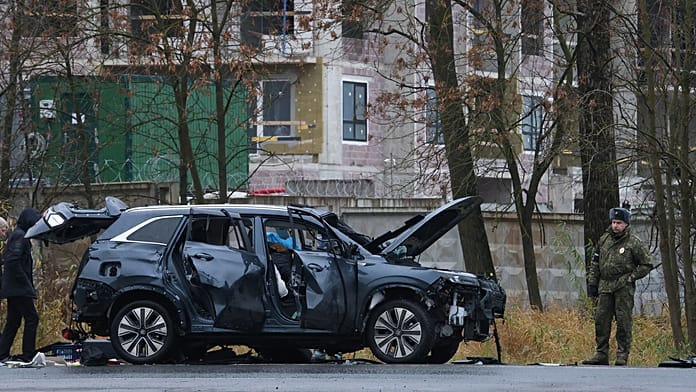
A car explosion in Saint Petersburg killed a serving Russian officer on Thursday morning, according to Euronews. The blast occurred at about 7 am in the Shushary area of the city's Pushkinsky district, on the Kolpino Highway, badly damaging the vehicle and shattering the windows of a passing bus.
The Russian outlet Fontanka reported that the victim was a colonel serving as chief navigator of the 6th Air and Air Defence Army. According to the outlet, an explosive device attached beneath his vehicle was detonated remotely as he drove away, and a family member nearby was also hurt. Russian authorities have not officially identified the serviceman or confirmed the cause of the explosion. The Investigative Committee has opened a murder investigation, with forensic experts examining the scene.
The timing invites comparison with earlier attacks. The blast comes more than four years after Russia launched its full-scale invasion of Ukraine in February 2022, and several Russian military officials have since been killed in attacks on Russian territory. Some of those attacks have been attributed to Kyiv, although Ukrainian authorities rarely claim responsibility. Investigators have not established any connection between Thursday's explosion and the war, and that caution should be taken at face value for now.
The rank and posting of the reported victim give the incident its weight. The 6th Air and Air Defence Army is a formation whose responsibilities bear directly on the air war, and the loss of a senior navigator officer in a city far from the front lines would be felt within the command structure. If the Fontanka account is confirmed, the method — a device placed under a private vehicle and triggered remotely — points to planning and local knowledge rather than an opportunistic act. None of this has been officially established.
Much remains unknown. The identity of the officer has not been confirmed by the authorities, nor has the cause of the blast been formally determined. No group or state has been named as responsible, and the Investigative Committee's murder inquiry may proceed without public findings. Whether the killing is connected to the war, to internal Russian disputes or to something else entirely cannot be settled from the available reporting.
For now the incident is best read as a single, serious event in a pattern that Russian cities have seen before, with the crucial difference that the authorities themselves have not yet drawn the line between this explosion and the conflict beyond Russia's borders. Until they do, or until evidence emerges from the investigation, the connection remains a question rather than a conclusion.


